Human communities constantly face questions about fairness. How should resources be distributed, responsibilities assigned, or decisions justified when people differ in their needs, capacities, histories, and circumstances? Moral and political language has developed many terms to answer these questions, yet some concepts play a more subtle role than others. Among them is the notion of equity, a concept that appears familiar but becomes elusive when examined closely. To ask what does equitable mean is not merely to ask for a dictionary explanation, but to inquire into a way of thinking about justice that responds to real differences rather than abstract sameness.
In everyday discourse, fairness is often equated with treating everyone the same. This intuition has moral force, especially in contexts where arbitrary privilege or discrimination must be resisted. Yet experience repeatedly shows that identical treatment can produce outcomes that feel deeply unfair. The moral tension between sameness and responsiveness lies at the heart of equity as a philosophical idea. It arises wherever general rules encounter particular lives.
This article offers a sustained philosophical investigation of equity as a mode of judgment. It explores its historical development, its role in moral and legal reasoning, and its relevance for contemporary ethical debates. Rather than relying on slogans or policy language, the discussion aims to uncover why equity has remained indispensable across centuries of reflection on justice.
Classical Origins of Equity
The roots of equity can be traced to ancient reflections on justice and practical reasoning. Early moral philosophers recognized that no system of rules, however carefully constructed, could anticipate the full range of human situations. Laws and norms are necessarily general, but life unfolds in concrete and often unpredictable ways.
In classical ethics, equity was closely associated with practical wisdom. Moral excellence did not consist in mechanical obedience to rules, but in the capacity to perceive what was appropriate in a particular case. A wise judge or citizen understood when strict adherence to a rule would undermine its purpose. Equity therefore functioned as a corrective, preserving justice when literal application would distort it.
This conception introduced a crucial insight into moral philosophy: justice requires interpretation. The moral life cannot be reduced to rule following alone, because rules depend on human judgment for their meaningful application.
Equity in Legal Traditions
Legal systems provided one of the earliest institutional contexts in which equity became explicit. Roman jurists distinguished between the generality of law and the fairness of its application. While laws were necessary for order and predictability, their rigidity sometimes produced harsh or unreasonable results. Equity offered a way to address exceptional cases without undermining legal stability.
Medieval legal traditions inherited this distinction. Courts recognized that conscience, intent, and circumstance mattered when rendering judgment. Equity did not replace law but supplemented it, ensuring that justice remained responsive rather than mechanical. This dual structure influenced later common law and civil law systems, embedding equitable reasoning into legal practice.
The persistence of equity in jurisprudence reflects a philosophical conviction: justice must remain human in scale. A system that ignores particular circumstances risks becoming oppressive even when formally correct.
Moral Judgment Beyond Rules
In moral philosophy, equity occupies a space between universal norms and particular cases. Moral principles provide orientation, but they cannot determine action without interpretation. Equity allows moral reasoning to remain flexible while avoiding arbitrariness.
An equitable judgment weighs the purpose of a norm against the realities of a situation. It asks whether applying a rule in a given context achieves the moral end the rule was designed to serve. This approach challenges ethical theories that rely exclusively on abstract principles while resisting the slide into moral relativism.
Such judgment becomes especially important in assessments of responsibility. Individuals differ in their opportunities, knowledge, and constraints. Holding everyone to identical standards without regard to these differences can obscure genuine injustice. Equity insists that moral evaluation must attend to conditions as well as actions.
Equity, Equality, and Justice
The relationship between equity and equality is a recurring source of confusion. Equality emphasizes sameness of treatment, often expressed through identical rights or procedures. Equity, by contrast, emphasizes fairness that responds to difference. This does not imply rejection of equality, but rather its completion.
Equal respect for persons does not require identical treatment in all circumstances. When individuals begin from unequal positions, treating them the same can perpetuate disadvantage. Equity builds upon equality by asking how equal moral worth can be realized in unequal contexts.
Political debates frequently hinge on this distinction. Disagreements about taxation, education, or healthcare often arise not because parties reject fairness, but because they differ on whether fairness is better achieved through uniform rules or context sensitive adjustments.
Equity in Social Institutions
Educational systems provide a clear illustration of equity in practice. Providing identical resources to all students may appear fair, yet it often fails to account for differences in background, learning needs, or social support. An equitable approach adjusts assistance so that students have a genuine opportunity to succeed rather than a merely formal one.
Healthcare raises similar concerns. Equal access to services does not guarantee fair outcomes when individuals face different risks and barriers. Equity requires responsiveness to need, guiding the allocation of care in a way that reflects vulnerability rather than uniform distribution alone.
Economic policy likewise relies on equitable reasoning. Progressive taxation, social insurance, and labor protections are justified by the recognition that markets alone do not distribute burdens and benefits fairly. These policies aim to correct structural imbalances that equal treatment alone cannot address.
Equitable Definition
From a philosophical perspective, an equitable definition emphasizes fairness that responds to context rather than rigid adherence to uniform standards. It highlights the role of judgment, discretion, and moral perception in applying norms to concrete situations.
This understanding distinguishes equity from favoritism or arbitrariness. It remains principled, guided by reasons that can be articulated and defended. Equity seeks consistency at a deeper level, one that recognizes morally relevant differences without abandoning general standards altogether.
Equitable Meaning
The equitable meaning of fairness becomes especially clear in everyday life. People routinely adjust expectations based on circumstances. We excuse certain failures due to hardship, offer additional support to those facing obstacles, and recognize that identical treatment can sometimes be unfair.
These practices reveal an implicit understanding of equity. Moral reasoning in daily life rarely follows a mechanical script. Instead, it involves sensitivity to context, intention, and consequence. Equity names this dimension of moral life, giving conceptual clarity to judgments people already make intuitively.
Equitable Synonym
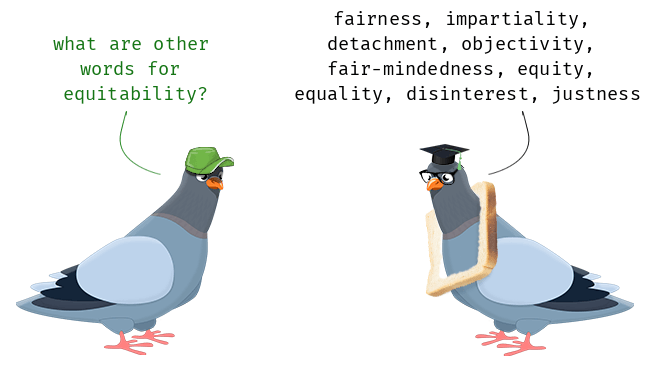
Searching for an equitable synonym often leads to terms such as fair, just, or impartial. Yet none of these fully captures the distinctive nuance of equity. Fairness may suggest procedural consistency, while equity emphasizes responsiveness. Justice can imply formal correctness, whereas equity highlights humane judgment.
The absence of a perfect synonym explains why the concept remains necessary. It occupies a space that other terms only partially cover, reminding us that moral life resists complete formalization.
Equitability and Institutional Assessment
The concept of equitability refers to the capacity of a system or decision making process to be assessed as fair in this context sensitive sense. It directs attention not only to outcomes but also to procedures. A policy may produce acceptable results in some cases while lacking equitability if it consistently overlooks certain perspectives or needs.
Evaluating equitability requires ongoing reflection. Social conditions change, and judgments that once seemed fair may later appear inadequate. This dynamic character distinguishes equity from static models of justice and underscores its philosophical depth.
Acting Equitably in Practice
To act equitably is to balance general norms with attention to particular circumstances. This balance is demanding. Excessive rigidity undermines fairness, while unchecked discretion risks inconsistency. Equitable action therefore depends on cultivated judgment and ethical sensitivity.
In roles involving authority such as teaching, judging, or leadership, acting equitably requires awareness of power and responsibility. Decisions affect people unevenly, and equity demands careful consideration of these effects.
Defining Equity Reflectively
To define equitable in reflective terms is to describe a mode of judgment that corrects the limitations of general rules by attending to morally relevant differences. It affirms that justice must be responsive to human diversity rather than blind to it. Equity does not reject rules but completes them by ensuring that their application aligns with their purpose.
Contemporary Ethical Challenges
Equity plays a central role in contemporary ethical debates. Discussions of global justice raise questions about fair distribution of burdens and benefits across nations with different histories and capacities. Environmental responsibility involves similar concerns, particularly regarding future generations who cannot represent themselves.
Technological development also introduces new challenges. Access to digital infrastructure, medical innovation, and artificial intelligence raises questions about fairness that cannot be resolved through equal treatment alone. Equity provides a framework for addressing these asymmetries responsibly.
Equity and Merit
A recurring tension in moral and political thought concerns the relationship between fairness and merit. Societies often reward effort, talent, or achievement, yet these qualities themselves are shaped by background conditions that individuals do not choose. Family environment, access to education, health, and social networks all influence what a person can reasonably accomplish. Reflection on equity brings this tension into sharp focus.
Merit based systems promise impartiality by linking reward to performance, but they risk overlooking unequal starting points. When advantages accumulate, merit can become a mechanism that legitimizes existing disparities rather than a neutral measure of contribution. Equity invites a deeper evaluation of merit by asking whether opportunities to demonstrate ability are themselves fairly distributed.
This perspective does not deny the value of effort or responsibility. Instead, it situates them within a broader moral landscape in which achievement is never purely individual. By acknowledging the social conditions that enable success, equity reframes merit as a shared outcome rather than a solitary accomplishment.
Equity and Punishment
Questions of punishment provide another context in which equity becomes philosophically significant. Legal and moral systems often rely on standardized penalties to ensure consistency. Yet individuals differ in intention, understanding, and circumstance. Treating all offenses identically can obscure meaningful distinctions between cases.
An equitable approach to punishment considers not only the act but the agent. Factors such as coercion, ignorance, or diminished capacity affect moral responsibility. Recognizing these differences does not undermine accountability but refines it. Justice that ignores context risks becoming excessive, while justice informed by equity seeks proportionality.
This insight has influenced modern debates about sentencing, rehabilitation, and restorative practices. Rather than viewing punishment solely as retribution, equity supports approaches that aim at repair, reintegration, and prevention of future harm.
Equity in Global Contexts
In an interconnected world, questions of fairness extend beyond national boundaries. Global inequalities in wealth, health, and environmental exposure raise moral concerns that cannot be addressed through uniform standards alone. Countries differ in historical responsibility, economic capacity, and vulnerability.
Equity provides a framework for evaluating these differences without abandoning shared obligations. Climate responsibility, for example, cannot be allocated solely on present emissions without considering past industrialization and its benefits. Similarly, global health initiatives must account for disparities in infrastructure and resources.
By emphasizing context and responsibility, equity supports cooperative solutions that respect difference while affirming common humanity. It challenges simplistic models of fairness that ignore history and power.
Risks and Critiques of Equity
Despite its moral appeal, equity is not without risks. Because it relies on judgment, it can be misused to justify favoritism or inconsistency. Without clear criteria, appeals to context may mask bias or undermine trust in institutions.
Philosophical critics warn that excessive discretion can erode transparency. If decisions appear unpredictable, individuals may perceive systems as arbitrary. Equity therefore requires accountability. Judgments must be explainable, grounded in reasons that others can examine and contest.
This tension highlights the need for balance. Equity complements rules rather than replaces them. It functions best within frameworks that combine general standards with reasoned flexibility.
Education of Judgment
The effective practice of equity depends on cultivated judgment. Moral education, professional training, and civic culture all play a role in shaping the ability to weigh context responsibly. Judgment is not innate but developed through experience, reflection, and dialogue.
Institutions that rely on equitable reasoning must therefore invest in ethical formation. Whether in courts, schools, or public administration, decision makers require not only technical competence but moral discernment. This dimension of education underscores that equity is as much a virtue as a principle.
Synthesis
Across its many applications, equity reveals a common insight. Fairness cannot be reduced to identical treatment or rigid procedure. Human life is marked by difference, contingency, and historical depth. Justice that ignores these features risks losing its moral grounding.
Equity offers a way to navigate between abstraction and arbitrariness. It affirms general norms while insisting that their application remain responsive to lived reality. In doing so, it preserves the humane core of moral and political life.
By attending to context, responsibility, and proportion, equity remains an indispensable guide wherever human beings seek to live together under shared norms.
Conclusion
The question of what does equitable mean leads beyond simple definitions into the heart of moral and political philosophy. Equity names a form of fairness that acknowledges human variability, contextual complexity, and the limits of rigid rules.
Across law, ethics, and social life, equity functions as a corrective principle, ensuring that general norms remain connected to lived reality. By understanding equity in this deeper sense, we gain insight into why fairness remains one of the most enduring and demanding challenges of human coexistence.