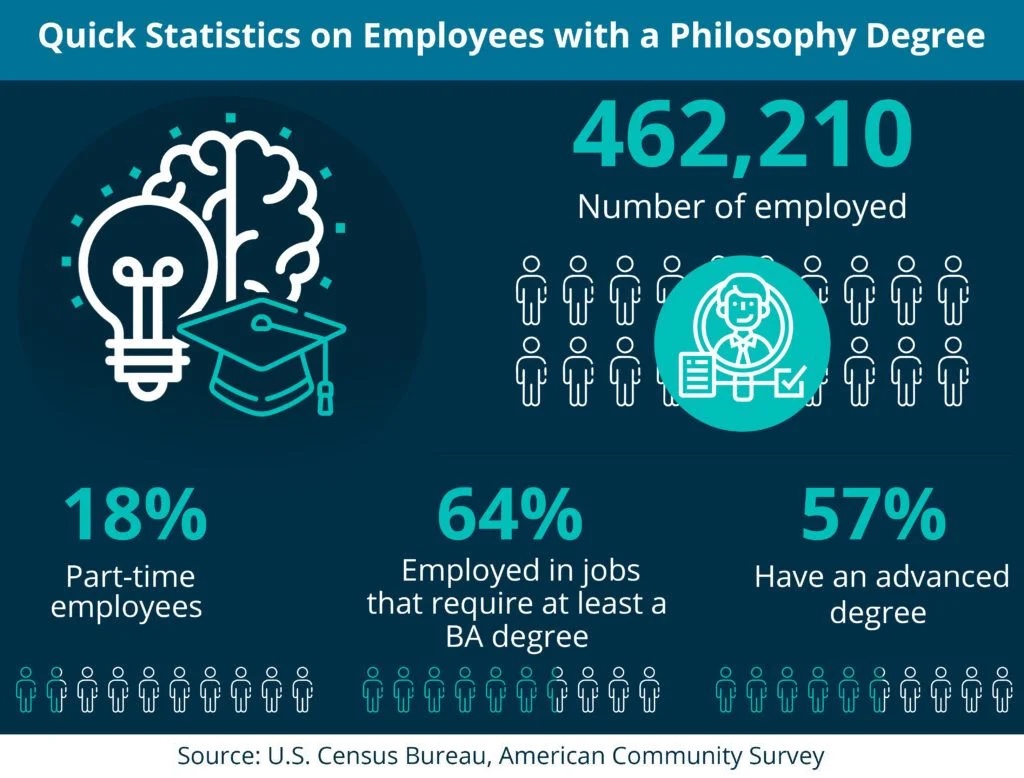
The question of what you can do with a philosophy degree appears simple, yet it opens into a broader reflection on the nature of education, work, and intellectual development. Unlike degrees that are tightly bound to a single profession, a philosophy degree does not prescribe a single career path. Instead, it develops a set of intellectual capacities that can be applied across a wide range of fields.
This flexibility often leads to misunderstanding. Some assume that a philosophy degree lacks practical value because it is not directly tied to a specific job. Others recognize that its value lies precisely in its breadth. To understand what you can do with a philosophy degree, it is necessary to examine both the skills it develops and the diverse opportunities it creates.
Philosophy Degree: What It Actually Teaches
A philosophy degree is not merely the study of abstract ideas. It is training in reasoning, analysis, and structured argument. Students learn to examine complex problems, identify assumptions, and construct coherent positions.
These skills are developed through engagement with fundamental questions. What is knowledge? What is truth? What is a good life? These questions require careful thinking and precise expression. Over time, students learn to navigate ambiguity, evaluate competing perspectives, and communicate clearly.
In addition to analytical skills, philosophy cultivates intellectual discipline. Reading difficult texts, engaging with unfamiliar ideas, and sustaining long chains of reasoning require patience and focus. These qualities are transferable to many professional contexts.
What Jobs Can You Get with a Philosophy Degree
One of the most common questions is what jobs you can get with a philosophy degree. The answer is not limited to a single category because philosophy graduates enter a wide range of professions.
Common career paths include law, business, education, writing, consulting, and public service. Philosophy graduates are often valued for their ability to think critically, solve problems, and communicate effectively.
In law, for example, the ability to construct arguments and analyze texts is essential. Many philosophy graduates go on to law school and build successful legal careers.
In business, analytical thinking and ethical reasoning are increasingly important. Philosophy graduates can work in management, strategy, or entrepreneurship.
In writing and media, the ability to articulate ideas clearly is a major advantage. Philosophy graduates often pursue careers in journalism, publishing, or content creation.
Philosophy Jobs and Career Diversity
Philosophy jobs are not limited to academic positions. While some graduates choose to remain within the field, many apply their skills in other domains.
Jobs in philosophy itself include teaching, research, and academic publishing. These roles require advanced study and often lead to positions in universities or research institutions.
Outside academia, philosophy graduates work in fields that require strong analytical and communication skills. These include policy analysis, ethics consulting, technology, and finance.
The diversity of philosophy jobs reflects the versatility of the degree. Rather than preparing students for a single role, it equips them with tools that can be adapted to different contexts.
Philosophy Major Jobs in Practice
When looking at philosophy major jobs, it is helpful to consider how employers perceive the degree. Employers often value candidates who can think independently, analyze complex situations, and communicate clearly.
Philosophy majors demonstrate these abilities through their coursework. Writing essays, engaging in debates, and interpreting texts all contribute to the development of these skills.
As a result, philosophy graduates are competitive candidates in fields that require intellectual flexibility. They are often able to transition between roles and adapt to changing professional environments.
Philosophy Degree Jobs in the Modern Economy
In the modern economy, where many jobs require problem solving and adaptability, a philosophy degree can be particularly valuable. Automation and technological change are transforming the nature of work, increasing demand for skills that cannot easily be replicated by machines.
Critical thinking, ethical reasoning, and creativity are among these skills. Philosophy graduates are trained in all three.
This does not mean that a philosophy degree guarantees employment. Like any degree, it must be combined with practical experience, networking, and strategic career planning. However, it provides a strong foundation for long term professional development.
Jobs for Philosophy Majors Across Industries
Jobs for philosophy majors can be found in many industries. In technology, for example, there is growing demand for professionals who can address ethical questions related to artificial intelligence, data privacy, and digital platforms.
In healthcare, ethical decision making is central to issues such as patient care, medical research, and resource allocation. Philosophy graduates can contribute to these discussions through roles in administration or policy.
In government and public service, the ability to analyze complex problems and develop coherent policies is essential. Philosophy graduates often work in advisory roles or within public institutions.
In business, companies value employees who can think strategically and communicate effectively. Philosophy majors can work in management, marketing, or consulting.
Online Philosophy Degree: Accessibility and Flexibility
The rise of the online philosophy degree has expanded access to philosophical education. Students who may not be able to attend traditional universities can now study philosophy remotely.
An online philosophy degree offers flexibility, allowing students to balance education with other commitments. It also enables access to institutions and instructors that might otherwise be unavailable.
However, the quality of online programs varies. It is important to choose a program that provides rigorous training in philosophy and opportunities for interaction with instructors and peers.
Philosophy Degree Online vs Traditional Study
When considering a philosophy degree online versus traditional study, there are several factors to consider. Traditional programs often provide more direct interaction, access to campus resources, and a structured environment.
Online programs offer greater flexibility and accessibility. They may be particularly suitable for students who are working or who have other commitments.
Both formats can provide a strong philosophical education if they are well designed. The choice depends on individual circumstances and preferences.
Doctor of Philosophy Degree and Advanced Study
For those interested in academic careers, the doctor of philosophy degree represents the highest level of study. This degree involves original research and contributes to the development of philosophical knowledge.
A doctoral program requires a significant commitment of time and effort. It typically includes coursework, comprehensive exams, and the completion of a dissertation.
Graduates with a doctor of philosophy degree may pursue careers in academia, research, or specialized professional fields. However, academic positions are competitive, and alternative career paths should also be considered.
Philosophy Professor Jobs and Academic Careers
Philosophy professor jobs are among the most visible career paths within the field. These positions involve teaching, research, and participation in academic communities.
To become a philosophy professor, one typically needs a doctoral degree and a strong record of research. The path is demanding and competitive, but it offers the opportunity to engage deeply with philosophical questions and to contribute to the education of others.
Academic careers also include roles such as lecturers, researchers, and administrators. These positions vary in terms of responsibilities and stability.
Jobs in Philosophy Beyond Academia
Jobs in philosophy are not limited to universities. Philosophical training can be applied in various professional contexts.
Ethics consulting is one example. Organizations increasingly seek guidance on ethical issues related to technology, business practices, and public policy.
Another area is writing and communication. Philosophy graduates often work as writers, editors, or content creators, using their ability to articulate complex ideas.
Philosophy also intersects with fields such as law, psychology, and political science. Interdisciplinary work can open additional career opportunities.
Building a Career with a Philosophy Degree
Building a career with a philosophy degree requires more than completing coursework. It involves developing practical skills, gaining experience, and making strategic choices.
Internships, part time work, and extracurricular activities can help students apply their philosophical training in real world contexts. Networking and professional development are also important.
Philosophy graduates who actively engage with their career development are more likely to find opportunities that align with their interests and abilities.
The Value of a Philosophy Degree
The value of a philosophy degree cannot be measured solely in terms of immediate job outcomes. It lies in the development of intellectual capacities that are useful across many areas of life.
Philosophy teaches individuals how to think, how to question, and how to understand complex problems. These abilities are relevant not only in professional contexts but also in personal and social life.
In a world that is increasingly complex and uncertain, the ability to think clearly and critically is a significant advantage.
Conclusion
What you can do with a philosophy degree depends on how you choose to apply it. The degree does not limit you to a single path. Instead, it opens multiple possibilities.
From law and business to education and public service, philosophy graduates contribute to many fields. They bring analytical skills, ethical awareness, and the ability to communicate effectively.
The philosophy degree is not a narrow qualification. It is a foundation for intellectual and professional development. Its value lies in its flexibility, its depth, and its capacity to prepare individuals for a wide range of challenges in the modern world.