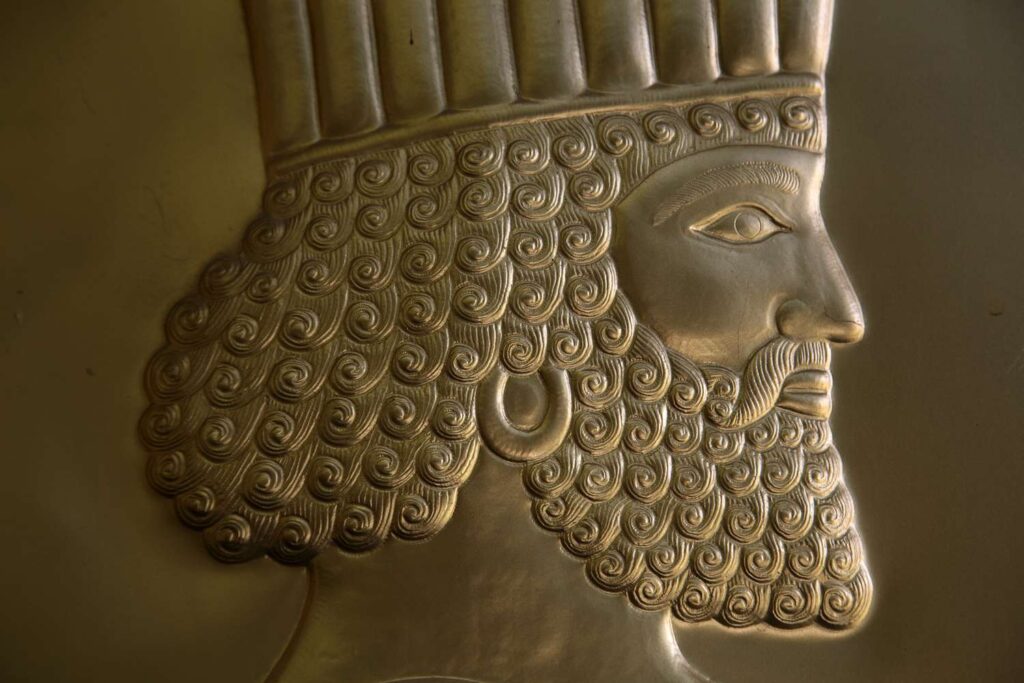
Zoroaster, known in Avestan as Zarathustra, stands as one of the most significant and yet often misunderstood figures in the history of philosophy and religion. His teachings gave rise to Zoroastrianism, one of the world’s oldest monotheistic or dualistic traditions, and his influence extended far beyond ancient Iran into the intellectual and spiritual history of the Near East and beyond. Although much of his life remains historically uncertain, the philosophical structure of his thought, preserved in the Gathas and later Zoroastrian texts, reveals a deeply coherent and rigorous vision of reality, ethics, and human responsibility.
Zoroastrian philosophy is not merely a religious system in the narrow sense. It is a comprehensive worldview that integrates cosmology, ethics, epistemology, and political order into a unified framework. At its core lies a profound concern with truth, moral choice, and the structure of reality as a field of conflict between order and deception. To understand Zoroaster is to encounter a philosophy that treats human life as fundamentally meaningful, morally charged, and cosmically significant.
The Historical Zoroaster
The historical figure of Zoroaster is difficult to date with precision. Estimates range widely, from the second millennium BCE to the early first millennium BCE. What matters philosophically is not the exact chronology but the content of the teachings attributed to him. The oldest and most authoritative expressions of his thought are found in the Gathas, a collection of hymns written in an archaic form of Avestan. These texts are poetic in form but philosophical in substance.
Zoroaster appears as a reformer. He challenges existing religious practices, especially those involving ritual excess or moral indifference, and redirects attention toward ethical responsibility and the worship of Ahura Mazda, the Wise Lord. His message is not primarily ritualistic. It is ethical and intellectual. He calls for right understanding, right intention, and right action.
Ahura Mazda and the Structure of Reality
At the center of Zoroastrian philosophy stands Ahura Mazda, the Wise Lord. Ahura Mazda is not merely a powerful deity among others. He represents wisdom, truth, order, and the ultimate source of goodness. In philosophical terms, Ahura Mazda embodies the principle of intelligible and moral reality.
This introduces a crucial idea. Reality is not morally neutral. It is structured in such a way that truth and goodness are fundamental, not accidental. The world is intelligible because it is grounded in wisdom. To understand reality is therefore to move toward truth, and to move toward truth is to align oneself with Ahura Mazda.
This conception unites metaphysics and ethics. The nature of being is not separate from the nature of value. What is most real is also what is most good and most true.
Asha and Druj
One of the most important concepts in Zoroastrian philosophy is asha. Asha represents truth, order, righteousness, and proper alignment with reality. It is both a cosmic and a moral principle. It governs the structure of the world and the conduct of human life.
Opposed to asha is druj, the principle of falsehood, disorder, and deception. Druj is not merely lying in the narrow sense. It is the distortion of reality, the disruption of order, and the corruption of truth.
This opposition is central to Zoroastrian philosophy. It defines the structure of existence. Human beings are not neutral observers of this opposition. They are participants in it. Every thought, every word, and every action contributes either to asha or to druj.
This framework creates a unified vision of truth. Truth is not only a matter of correct belief. It is a way of being. To live truthfully is to participate in the order of reality. To live falsely is to undermine that order.
Ethical Dualism and Moral Responsibility
Zoroastrianism is often described as a dualistic system, and this description is broadly accurate. However, its dualism is not a simple metaphysical symmetry between two equal powers. It is a moral dualism centered on the opposition between good and evil, truth and falsehood.
Ahura Mazda represents wisdom and order. The opposing force, Angra Mainyu, represents destruction, deceit, and chaos. Yet the outcome of this opposition is not predetermined in a trivial sense. Human beings play an essential role.
This introduces a powerful concept of moral responsibility. Individuals are called to choose. They are not bound by fate in such a way that their actions are irrelevant. Their choices matter, not only for themselves but for the cosmic struggle between order and chaos.
This gives Zoroastrian philosophy a strong sense of agency. It affirms that human life has significance. Each person contributes to the condition of the world.
Good Thoughts, Good Words, Good Deeds
The ethical teaching of Zoroaster is often summarized in the triad of good thoughts, good words, and good deeds. This formula is deceptively simple. It expresses a profound philosophical insight into the unity of human life.
Thought, speech, and action are not independent domains. They are interconnected aspects of a single moral reality. Corruption in one dimension tends to spread to the others. Integrity must therefore be comprehensive.
Good thoughts involve understanding and intention. Good words involve truthful and responsible speech. Good deeds involve just and constructive action. Together they form a complete ethical system.
This triad emphasizes practice. Zoroastrian philosophy is not concerned with abstract speculation alone. It demands lived commitment. The truth must be enacted, not merely contemplated.
Freedom and Choice
A central philosophical strength of Zoroastrianism lies in its treatment of freedom. Human beings are understood as capable of genuine choice. They can align themselves with asha or with druj.
This position avoids both strict determinism and arbitrary randomness. The world is structured, and moral principles are real. Yet within this structure, human agency operates meaningfully.
This raises important philosophical questions. How is freedom possible in a world governed by divine wisdom. How do individual choices contribute to a larger cosmic order. Zoroastrian philosophy answers these questions not through abstract argument but through its ethical framework. Freedom is real because moral responsibility is real. The structure of reality calls for participation, not passive observation.
Cosmology and the Structure of Time
Zoroastrian cosmology presents the world as a field of conflict that unfolds over time. The universe has a beginning, a middle, and an end. It is not an endless cycle without direction. It is a moral drama moving toward resolution.
This temporal structure is philosophically significant. It introduces a linear conception of time in which events have direction and purpose. The struggle between asha and druj is not meaningless. It leads toward the eventual restoration of order.
This idea of cosmic history influenced later religious traditions in profound ways. Concepts such as final judgment, resurrection, and the ultimate triumph of good have parallels in later developments.
The Problem of Evil
Zoroastrian philosophy confronts the problem of evil directly. Evil is not treated as a mere illusion or a simple absence. It is real, active, and destructive.
At the same time, evil is not ultimate. It does not have the same ontological status as truth and order. It is opposed to them and ultimately destined to be overcome.
This position avoids two extremes. It does not deny the reality of evil, which would make suffering unintelligible. Nor does it grant evil final victory, which would render moral effort meaningless.
Instead, Zoroastrian philosophy presents a world in which evil is real but limited. It can be resisted, and resistance matters.
The Soul and Judgment
Zoroastrian thought gives serious attention to the fate of the individual after death. The soul does not vanish. It faces judgment based on its alignment with asha or druj.
The imagery of the Chinvat Bridge expresses this idea. The soul must cross a boundary where its moral condition becomes evident. For the righteous, the crossing is secure. For the wicked, it is perilous.
This doctrine reinforces ethical seriousness. Actions have consequences beyond immediate experience. Justice is not confined to the present moment.
Kingship and Political Order
Zoroastrian philosophy influenced political thought in the Persian Empire. The ruler was expected to uphold asha, to maintain justice, and to protect order.
This introduces a moral dimension to political authority. Power is not self justifying. It must be aligned with truth. A ruler who governs through deceit undermines his own legitimacy.
This conception of kingship connects ethics with governance. Political order becomes an extension of moral order.
Ritual and Purity
Zoroastrianism includes a system of ritual practices, especially concerning purity and the handling of elements such as fire, water, and earth. These practices are not arbitrary. They reflect the belief that the material world participates in the moral structure of reality.
Purity is not merely physical cleanliness. It is a symbolic and practical expression of alignment with order. Pollution represents disruption.
These ideas show how philosophy can be embodied in practice. The care of the physical world becomes part of ethical life.
Later Development and Systematization
In the Sasanian period, Zoroastrian thought became more systematized. Texts elaborated on cosmology, ethics, and theology in more explicit forms. The tradition engaged with external influences, including Greek philosophy.
This development shows that Zoroastrian philosophy was capable of growth and adaptation. It was not fixed in an early form. It continued to reflect on its own principles.
Influence on Other Traditions
Zoroastrianism had a significant influence on later religious and philosophical traditions. Elements such as moral dualism, angelology, eschatology, and the idea of a final judgment appear in Judaism, Christianity, and Islam.
This influence does not mean that these traditions simply borrowed from Zoroastrianism. It means that they developed in an intellectual environment shaped partly by Persian ideas.
The philosophical importance of this influence lies in the transmission of concepts about moral order, history, and the destiny of the world.
Philosophy as a Way of Life
Zoroastrian philosophy is not confined to theoretical reflection. It is a way of life. It demands participation in truth, commitment to justice, and responsibility in action.
This practical orientation distinguishes it from purely speculative systems. It does not separate knowledge from conduct. To understand the truth is to be obligated by it.
Conclusion
The philosophy of Zoroaster and Zoroastrianism presents a unified vision of reality grounded in truth, order, and moral responsibility. It integrates metaphysics, ethics, cosmology, and political thought into a coherent whole.
At its center lies the conviction that human beings are active participants in a meaningful universe. Their choices matter. Their actions contribute to the balance between order and chaos. Truth is not merely to be known but to be lived.
This vision has enduring philosophical power. It addresses fundamental questions about the nature of reality, the problem of evil, the role of human freedom, and the structure of moral life. It remains one of the most significant contributions to the history of philosophical thought.