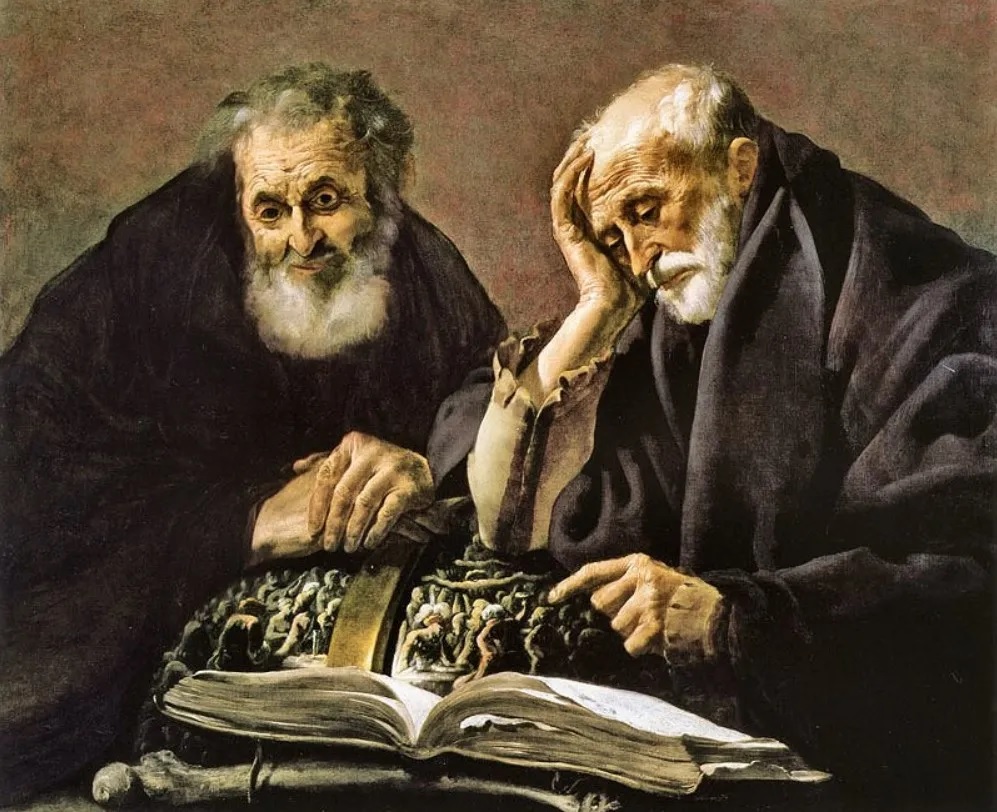
The question of who counts as the first philosopher in the world is more complex than it may initially appear. It is not only a matter of identifying the earliest thinker who asked deep questions about existence, but also of defining what philosophy itself is. If philosophy is understood as a systematic, rational inquiry into the nature of reality, knowledge, and human life, then the answer tends to point in one direction. If, however, philosophy includes early wisdom traditions, mythic reflection, and proto theoretical thinking, then the answer becomes broader and more contested.
Despite these nuances, one figure is most often recognized in the Western tradition as the first philosopher: Thales of Miletus. Yet the story does not end there. Other candidates from different cultural contexts, including ancient India and China, present compelling claims. Exploring this question requires both historical precision and philosophical reflection.
Defining Philosophy Before Identifying the First Philosopher
Before identifying the first philosopher, it is necessary to clarify what distinguishes philosophy from earlier forms of thought. Human beings have always reflected on the world. Prehistoric myths, religious narratives, and poetic traditions all contain attempts to explain existence. However, philosophy is typically distinguished by a shift away from mythological explanation toward rational inquiry.
Philosophy asks not only what is true, but why it is true, and it seeks answers that rely on reasoning rather than divine authority or tradition alone. This transition is often described as the move from mythos to logos, from storytelling to argument.
With this definition in mind, the first philosopher would be the earliest known individual to explain the world in terms of natural principles and rational argument rather than myth.
Thales of Miletus: The Traditional Answer
Thales of Miletus, who lived in the 6th century BCE in Greece, is widely regarded as the first philosopher in the Western tradition. He is also often called the first scientist, because his explanations of natural phenomena did not rely on gods or myths.
Thales proposed that the fundamental substance underlying all things is water. While this claim may seem simplistic today, its importance lies in its method rather than its content. Instead of attributing the diversity of the world to divine actions, Thales sought a unifying principle that could explain everything in natural terms.
This was a radical shift. It suggested that the world is intelligible, that it operates according to consistent principles, and that human reason can uncover those principles.
Thales is also credited with making predictions about natural events, such as eclipses, and with engaging in early forms of geometry. These activities further reinforce his status as a thinker who approached the world systematically.
Why Thales Matters
The significance of Thales is not that he was correct about water being the fundamental substance. Rather, it is that he initiated a new way of thinking. He asked questions that could be debated, tested, and refined. He opened the possibility of philosophical discourse.
Following Thales, other thinkers such as Anaximander and Anaximenes continued this line of inquiry, proposing different underlying principles and refining the methods of explanation. This marks the beginning of a tradition that would eventually lead to figures such as Socrates, Plato, and Aristotle.
In this sense, Thales is not just the first philosopher chronologically, but the founder of a way of thinking that defines philosophy itself.
Alternative Candidates: Beyond the Greek Tradition
While Thales is often considered the first philosopher in Western history, it is important to recognize that philosophical thinking did not begin in Greece alone. Other civilizations developed sophisticated systems of thought that may qualify as philosophy, depending on how the term is defined.
Ancient India: The Upanishadic Thinkers
In ancient India, the Upanishads, composed between roughly 800 and 500 BCE, contain profound reflections on the nature of reality, the self, and ultimate truth. These texts explore questions such as the relationship between the individual self and the universal principle known as Brahman.
The thinkers behind the Upanishads engaged in dialogue, debate, and introspection. They sought knowledge through reasoning and direct experience, not merely through tradition. Some of their insights, such as the idea that the self is not identical with the body or mind, resonate strongly with later philosophical developments.
Although the Upanishads are not attributed to a single individual in the same way as Thales, they represent an early and highly sophisticated form of philosophical inquiry.
Siddhartha Gautama: The Buddha
Another major figure is Siddhartha Gautama, known as the Buddha, who lived around the 5th century BCE. While often regarded as a religious founder, the Buddha can also be understood as a philosopher.
He developed a systematic analysis of suffering, its causes, and its cessation. His teachings involve careful observation of the mind, logical analysis, and practical methods for transformation. The Four Noble Truths and the Eightfold Path present a structured framework for understanding and overcoming human dissatisfaction.
Unlike Thales, the Buddha focused less on the physical structure of the universe and more on the nature of human experience. Yet his approach is deeply philosophical, grounded in inquiry and reflection.
Ancient China: Early Philosophical Traditions
In ancient China, thinkers such as Confucius and Laozi also developed philosophical systems around the same time period. Confucius focused on ethics, social harmony, and the cultivation of character. Laozi explored the nature of the Dao, the underlying principle of the universe, emphasizing simplicity and alignment with natural processes.
These traditions demonstrate that philosophical thinking emerged independently in multiple regions. Each addressed fundamental questions about life, knowledge, and the nature of reality.
The Problem of Attribution
One difficulty in identifying the first philosopher is that many early traditions are not tied to a single identifiable individual. Oral transmission, collective authorship, and the passage of time make it difficult to assign precise origins.
Thales stands out partly because he is one of the earliest figures for whom we have a name and a set of attributed ideas. In other cultures, the earliest philosophical insights may be embedded in texts or traditions rather than associated with a single person.
This raises a deeper question: should the first philosopher be the first named individual, or the first instance of philosophical thinking, regardless of authorship?
Philosophy as a Universal Development
The emergence of philosophy in different parts of the world suggests that it is not tied to a specific culture but is a natural development of human thought. When societies reach a certain level of complexity, questions about existence, knowledge, and meaning arise in more systematic ways.
The transition from myth to reason may occur in different forms, but the underlying impulse is the same. Humans seek to understand their world not only through stories but through explanations that can be examined and debated.
In this sense, the search for the first philosopher may be less about identifying a single individual and more about recognizing a turning point in human intellectual history.
Why the Question Still Matters
Even if the answer is not definitive, the question of the first philosopher remains important. It highlights the origins of a way of thinking that continues to shape modern life. Science, ethics, politics, and even everyday reasoning all have roots in philosophical inquiry.
Understanding figures like Thales helps trace the development of critical thinking. Exploring parallel traditions in India and China broadens the perspective, showing that philosophy is a global phenomenon.
The question also invites reflection on what philosophy is today. Is it still defined by the same commitment to reason and inquiry? Or has it evolved into something broader?
A Balanced Conclusion
If one follows the traditional Western definition of philosophy as rational inquiry into the natural world, then Thales of Miletus is the most widely accepted answer to the question of the first philosopher. His attempt to explain the world through a single underlying principle marks a clear departure from mythological thinking.
However, if philosophy is understood more broadly as the systematic exploration of fundamental questions about existence and experience, then the answer becomes more inclusive. The authors of the Upanishads, the Buddha, and early Chinese thinkers all represent independent beginnings of philosophical thought.
Rather than a single starting point, philosophy may have multiple origins, each reflecting a different cultural pathway toward understanding.
In the end, the search for the first philosopher reveals something deeper than a historical fact. It shows that the desire to question, to understand, and to seek truth is a defining feature of human nature.