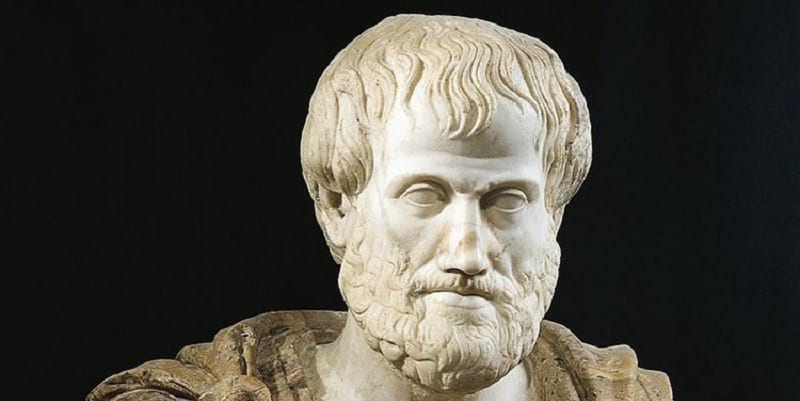
The books attributed to Aristotle constitute the most extensive and systematically organized body of philosophical writing to survive from antiquity. They are not occasional reflections or literary compositions, but the result of a sustained effort to understand reality as an ordered and intelligible whole. Through these works, Aristotle decisively shaped not only the content of philosophy, but the way philosophy itself would be practiced for centuries.
Aristotle’s writings are distinctive in purpose and style. Unlike dialogical or poetic philosophy, they are analytical and instructional. Their aim is to clarify concepts, define distinctions, and construct explanatory frameworks. Many of the surviving texts likely originate from teaching materials rather than polished publications, which gives them a dense and compressed character, but also a precision that later philosophical traditions found indispensable.
A defining feature of Aristotle’s books is their breadth. He does not confine philosophy to abstract speculation. His works address reasoning, nature, life, ethics, politics, language, and art as interconnected domains. Each field is treated as part of a larger structure rather than as an isolated discipline. This integrative approach explains why Aristotle became foundational not only to philosophy, but also to science, education, and political thought.
His method combines careful observation with rational analysis. Aristotle begins from common experience and asks how things function, refining appearances rather than rejecting them. Even when specific empirical claims are outdated, this method remains intelligible and instructive.
Central to all his books is a concern with explanation. To understand something is to know why it is the way it is. Aristotle consistently seeks causes, purposes, and structures rather than surface descriptions. For this reason, his writings endure not because they provide final answers, but because they offer a model of philosophical seriousness, systematic thinking, and respect for complexity that remains influential to this day.
Complete List of Aristotle’s Books
Categories
This work lays the groundwork for Aristotle’s entire philosophical system by identifying the most basic ways in which anything that exists can be spoken about. Aristotle introduces fundamental modes of predication such as substance, quantity, quality, relation, place, time, position, state, action, and affection. The central concern is how language corresponds to reality and how different kinds of being are classified. Categories is not merely linguistic but ontological, as it establishes how things are structured in the world and how thought can meaningfully refer to them.
On Interpretation
This book examines propositions, statements, and their relation to truth and falsity. Aristotle analyzes affirmation and negation, contradiction, universals, and particulars, as well as modal notions such as possibility and necessity. A key theme is how language expresses thought and how thought relates to reality. The work also addresses future contingents, raising early questions about determinism and free will.
Prior Analytics
Here Aristotle develops formal logic in a systematic way. The book introduces syllogistic reasoning, explaining how conclusions necessarily follow from premises when arguments are valid. Aristotle classifies different types of syllogisms and figures, showing how deductive reasoning works independently of subject matter. This work establishes logic as a tool for all sciences and forms the backbone of rational demonstration.
Posterior Analytics
This text goes beyond formal validity to address what counts as genuine knowledge. Aristotle distinguishes mere opinion from scientific understanding, arguing that true knowledge involves grasping causes, not just facts. He explains demonstration, first principles, and the role of intuition in knowing fundamental truths. The work defines science as structured knowledge grounded in necessary causes.
Topics
Topics focuses on dialectical reasoning rather than strict demonstration. Aristotle provides strategies for constructing and evaluating arguments based on generally accepted opinions. The goal is not certainty but reasoned discussion, especially useful in philosophical debate, teaching, and inquiry. The book trains the ability to argue both sides of a question intelligently.
Sophistical Refutations
This work exposes fallacious reasoning and deceptive argumentation. Aristotle classifies different kinds of logical and verbal fallacies, explaining how they mislead. The purpose is defensive as well as educational: to protect reason from manipulation and to sharpen philosophical judgment.
Physics
Physics is Aristotle’s fundamental investigation of nature. It examines motion, change, time, place, infinity, and causation. Aristotle defines nature as an internal principle of change and explains natural motion in contrast to artificial motion. The work establishes his theory of causes and his rejection of atomism and the void. It is philosophical rather than experimental, concerned with explaining how change itself is intelligible.
On the Heavens
This book applies Aristotle’s natural philosophy to the cosmos. He describes the structure of the universe, celestial motion, and the distinction between the earthly realm and the heavens. Aristotle introduces the fifth element, aether, and argues that heavenly bodies move eternally in perfect circles. The work reflects his belief in an ordered and intelligible cosmos.
On Generation and Corruption
Here Aristotle explains how substances come into being and pass away. He focuses on elemental transformation rather than atomic rearrangement, showing how qualitative changes produce generation and decay. The book clarifies the difference between alteration, growth, and substantial change.
Meteorology
Meteorology examines phenomena occurring between earth and sky, such as weather, winds, precipitation, comets, and earthquakes. Aristotle treats these events as natural processes governed by material causes rather than divine intervention. The work illustrates his effort to explain irregular phenomena within a rational framework.
History of Animals
This is a descriptive and observational work in which Aristotle catalogs animal species, anatomy, reproduction, and behavior. Rather than offering theory, the book gathers empirical data as a foundation for biological explanation. It represents one of the earliest systematic attempts at biological classification.
Parts of Animals
In this work Aristotle explains why animals have the parts they do. He focuses on function and purpose, arguing that biological structures exist for specific ends. The book exemplifies his teleological approach to nature and deepens the explanatory framework established in the History of Animals.
Generation of Animals
This text studies reproduction, embryology, heredity, and sexual differentiation. Aristotle analyzes how form is transmitted in generation and how development proceeds from potentiality to actuality. The work combines biology with metaphysical principles.
Movement of Animals
Here Aristotle investigates how animals initiate motion. He connects desire, perception, and reason to bodily movement, showing how psychological factors translate into physical action. The book links biology with philosophy of mind.
Progression of Animals
This work focuses on locomotion, explaining why different animals move in different ways. Aristotle examines anatomical structures, balance, and coordination, integrating observation with causal explanation.
On the Soul
This foundational text explores what it means to be alive. Aristotle defines the soul as the form of a living body and analyzes its faculties: nutrition, perception, desire, movement, and intellect. The work integrates biology, psychology, and metaphysics and remains central to philosophy of mind.
On Sense and Sensible Objects
This short work clarifies how perception operates and how senses relate to their objects. Aristotle examines the conditions under which sensation occurs and the unity of perceptual experience.
On Memory and Reminiscence
Here Aristotle analyzes memory as a retention of perception and distinguishes it from active recollection. He explores the temporal nature of memory and its role in experience and learning.
On Sleep and Wakefulness
This work studies sleep as a natural biological state. Aristotle explains sleep and waking in terms of bodily processes rather than mystical causes.
On Dreams
Aristotle examines dreaming as a continuation of sensory activity during sleep. He rejects supernatural explanations and treats dreams as psychological phenomena.
On Divination in Sleep
This text critically evaluates the idea that dreams predict the future. Aristotle argues that any apparent prophetic value is coincidental rather than causal.
Metaphysics
This is Aristotle’s deepest and most abstract work. It investigates being as such, substance, essence, form and matter, potentiality and actuality, and first causes. The book seeks the ultimate principles of reality and culminates in the concept of the unmoved mover. It provides the metaphysical foundation for his entire system.
Nicomachean Ethics
This ethical work examines human happiness, virtue, character, choice, responsibility, and friendship. Aristotle presents ethics as practical philosophy aimed at living well. Happiness is defined as rational activity in accordance with virtue over a complete life.
Eudemian Ethics
Similar in scope to the Nicomachean Ethics, this work offers an alternative presentation of Aristotle’s ethical thought, with some differences in emphasis and structure.
Magna Moralia
A shorter ethical treatise, possibly compiled from Aristotle’s lectures, focusing on moral virtue and practical reasoning.
Politics
Politics extends ethical inquiry to communal life. Aristotle analyzes the state, citizenship, constitutions, law, and justice. He treats political organization as natural and evaluates regimes based on how well they promote human flourishing.
Constitution of the Athenians
This work provides a historical and analytical account of Athens’ political system. It combines empirical description with institutional analysis and shows Aristotle’s interest in real political structures.
Rhetoric
Rhetoric studies persuasion as a rational art. Aristotle analyzes argument, emotion, and character as means of persuasion. The work treats rhetoric as essential to civic life rather than as manipulation.
Poetics
Poetics examines poetry and drama, especially tragedy. Aristotle analyzes plot, character, imitation, and emotional effect, introducing the concept of catharsis. The work lays the foundation for literary theory.
Summary
Taken together, Aristotle’s books form a comprehensive system of thought covering logic, nature, life, mind, ethics, politics, and art. Each work addresses a specific domain, yet all are interconnected by a shared method: careful observation, conceptual clarity, and explanation through causes and purposes. This unity is why Aristotle’s writings remained central to philosophy, science, and education for centuries.