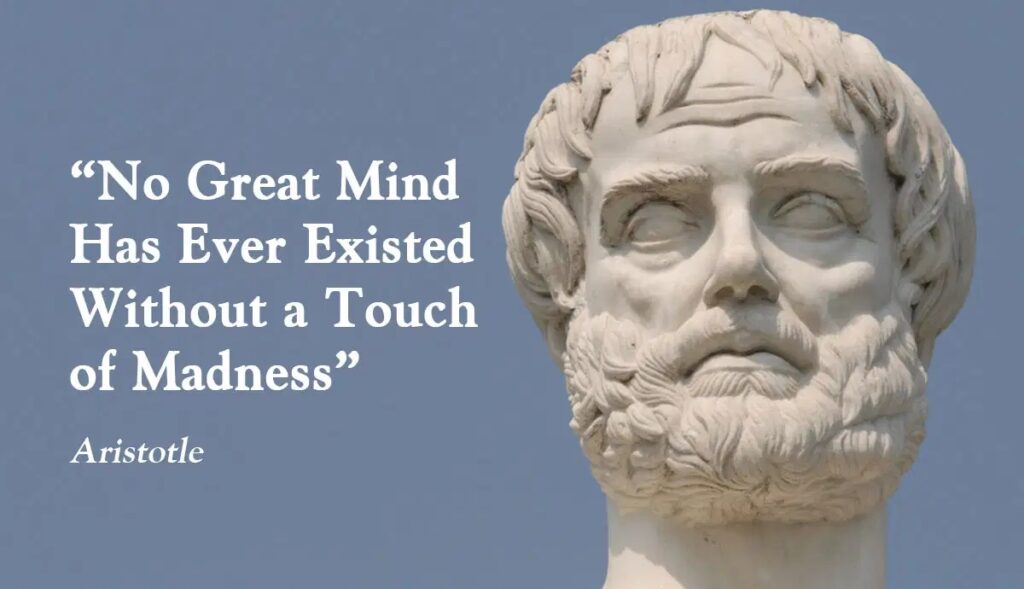
The quotes of Aristotle continue to circulate because they condense an unusually comprehensive philosophical vision into clear and durable formulations. Aristotle was not an aphoristic thinker by temperament. He was systematic, analytical, and often technical. Yet many of his formulations have survived as quotations because they express general principles about human life, knowledge, virtue, and reason with exceptional clarity.
Aristotle’s philosophy differs from that of many later thinkers in one crucial respect. He does not begin from radical doubt or abstract speculation. He begins from ordinary experience and asks how things actually function. His quotations therefore often sound practical, balanced, and realistic. They avoid extremes. They do not promise perfection, but coherence. They do not aim at transcendence, but at understanding how a good human life is possible within natural limits.
Many famous Aristotle quotes come from his ethical works, especially those concerned with virtue, habit, character, and purpose. Others come from his reflections on knowledge, politics, friendship, and education. When read carefully, these quotations reveal a unified outlook. Human beings are rational and social by nature. Excellence is cultivated through practice. Happiness is an activity, not a feeling. Reason must guide desire, but desire must also be educated rather than suppressed.
Famous Quotes by Aristotle
Below is a list of 50 Aristotle’s most famous quotations, each followed by a brief explanation of its philosophical meaning. Translations vary, but the core ideas remain stable.
1. “Knowing yourself is the beginning of all wisdom.”
Explanation: Self knowledge is foundational because ethical life requires understanding one’s character, tendencies, and limits. Without this, moral improvement is impossible.
2. “Happiness depends upon ourselves.”
Explanation: Happiness is not a matter of fortune alone. It arises from how one lives and acts. External goods matter, but character matters more.
3. “We are what we repeatedly do. Excellence, then, is not an act, but a habit.”
Explanation: Virtue is formed through repeated practice. Moral character is shaped gradually through consistent action rather than isolated choices.
4. “The whole is greater than the sum of its parts.”
Explanation: Systems, communities, and living beings cannot be understood merely by analyzing components in isolation. Structure and relation matter.
5. “It is the mark of an educated mind to be able to entertain a thought without accepting it.”
Explanation: Intellectual maturity requires openness without credulity. Understanding an argument does not require agreement.
6. “Man is by nature a political animal.”
Explanation: Human beings are naturally social. Fulfillment depends on participation in shared life, institutions, and collective deliberation.
7. “Pleasure in the job puts perfection in the work.”
Explanation: When desire aligns with reason, action becomes more complete. Enjoyment can reinforce excellence when properly ordered.
8. “Quality is not an act, it is a habit.”
Explanation: Consistent excellence arises from stable dispositions rather than occasional effort. This reinforces Aristotle’s ethical focus on character.
9. “The aim of the wise is not to secure pleasure, but to avoid pain.”
Explanation: Rational life seeks balance and stability rather than excess. Wisdom moderates desire rather than indulging it.
10. “Educating the mind without educating the heart is no education at all.”
Explanation: Knowledge alone is insufficient. Moral formation and emotional development are essential to genuine education.
11. “Hope is a waking dream.”
Explanation: Hope projects desire into the future. It can motivate action, but it can also distract from present responsibility if unchecked.
12. “The antidote for fifty enemies is one friend.”
Explanation: Friendship has ethical and psychological significance. A true friend stabilizes life more than external power or advantage.
13. “Patience is bitter, but its fruit is sweet.”
Explanation: Difficult discipline produces long term goods. Virtue often requires enduring short term discomfort for lasting benefit.
14. “Those who know, do. Those that understand, teach.”
Explanation: Knowledge is fulfilled in action and communication. Understanding implies the ability to guide others, not merely oneself.
15. “The energy of the mind is the essence of life.”
Explanation: Rational activity defines human flourishing. Life is most fully realized through thinking, judging, and understanding.
16. “No great mind has ever existed without a touch of madness.”
Explanation: Exceptional insight often requires deviation from convention. Creativity and originality may appear irrational to the ordinary mind.
17. “Friendship is a single soul dwelling in two bodies.”
Explanation: True friendship involves shared values and mutual recognition. It is an ethical relationship, not mere utility.
18. “He who has never learned to obey cannot be a good commander.”
Explanation: Authority requires experience with discipline. Leadership presupposes understanding of order and responsibility.
19. “The educated differ from the uneducated as much as the living differ from the dead.”
Explanation: Education animates reason and judgment. Without it, human capacities remain dormant.
20. “Excellence is an art won by training and habituation.”
Explanation: Ethical life is a cultivated practice. Virtue is learned through sustained effort guided by reason.
21. “The educated man seeks precision in each kind of knowledge only so far as the nature of the subject admits.”
Explanation: Not all subjects allow the same level of certainty. Wisdom lies in matching expectations of precision to the subject matter rather than forcing false exactness.
22. “Virtue lies in our power, and so too vice.”
Explanation: Moral character is not imposed by fate alone. Human beings are responsible for their dispositions because they are shaped through choice and habit.
23. “The purpose of art is to represent the universal, not the particular.”
Explanation: Art reveals general truths about human life rather than merely copying individual appearances. Its value lies in insight, not imitation alone.
24. “Courage is the first of human qualities because it is the quality which guarantees the others.”
Explanation: Moral action requires firmness. Without courage, other virtues cannot be consistently practiced when circumstances become difficult.
25. “To avoid criticism say nothing, do nothing, be nothing.”
Explanation: Action and thought inevitably provoke judgment. Avoiding criticism entirely means withdrawing from meaningful life.
26. “The worst form of inequality is to try to make unequal things equal.”
Explanation: Justice requires proportionality. Treating fundamentally different situations identically can itself be unjust.
27. “Democracy arises out of the notion that those who are equal in any respect are equal in all respects.”
Explanation: Aristotle critiques simplistic equality by pointing out that political equality must be carefully justified, not assumed universally.
28. “Wishing to be friends is quick work, but friendship is a slow ripening fruit.”
Explanation: Genuine friendship develops over time through shared life and character, not through immediate emotional impulse.
29. “He who overcomes his fears will truly be free.”
Explanation: Freedom is internal as much as external. Mastery over fear allows reason to guide action rather than impulse.
30. “The law is reason, free from passion.”
Explanation: Good law reflects rational order rather than emotional reaction. Justice requires stability and deliberation.
31. “Excellence is never an accident.”
Explanation: Virtue does not occur by chance. It is the result of intentional cultivation and disciplined practice.
32. “Learning is not child’s play; we cannot learn without pain.”
Explanation: Intellectual growth involves effort and discomfort. Understanding requires discipline rather than ease.
33. “Nature does nothing uselessly.”
Explanation: Aristotle’s teleological view holds that natural processes have purposes and functions rather than occurring randomly.
34. “The roots of education are bitter, but the fruit is sweet.”
Explanation: Early difficulty in learning leads to lasting benefit. Education demands patience before reward.
35. “Good habits formed at youth make all the difference.”
Explanation: Character is most malleable early in life. Ethical formation depends heavily on early practice.
36. “What is a friend? A single soul dwelling in two bodies.”
Explanation: Friendship is a moral unity grounded in shared values, not merely mutual advantage.
37. “The aim of art is to imitate nature.”
Explanation: Art reflects natural order and intelligibility, translating reality into meaningful form.
38. “Change in all things is sweet.”
Explanation: Aristotle recognizes that human beings are naturally responsive to variation and development, not static repetition.
39. “It is simplicity that makes the uneducated more effective than the educated when addressing popular audiences.”
Explanation: Rhetoric often succeeds through clarity and emotional appeal rather than technical complexity.
40. “Those that know, do; those that understand, teach.”
Explanation: Understanding implies the ability to guide others. Knowledge reaches completion in action and instruction.
41. “The more you know, the more you realize you don’t know.”
Explanation: Genuine understanding produces intellectual humility. Awareness of complexity grows with knowledge rather than diminishing.
42. “We cannot learn without pain.”
Explanation: Learning requires effort and discipline. Intellectual growth is inseparable from difficulty and resistance.
43. “The end of labor is to gain leisure.”
Explanation: Work is not an end in itself. Its purpose is to create the conditions for contemplation, culture, and higher activity.
44. “Happiness is an activity of the soul in accordance with virtue.”
Explanation: Happiness is not a feeling or possession, but a way of living shaped by rational excellence over time.
45. “A friend to all is a friend to none.”
Explanation: Friendship requires selectivity and depth. Universal friendliness lacks the commitment necessary for genuine bonds.
46. “Equality consists in the same treatment of similar persons.”
Explanation: Justice is based on proportional equality, not identical treatment regardless of relevant differences.
47. “The young are heated by nature as drunken men by wine.”
Explanation: Youth is marked by intensity and impulse. Moral education must account for emotional excess rather than deny it.
48. “The soul never thinks without an image.”
Explanation: Thought is connected to perception and imagination. Abstract reasoning depends on concrete representations.
49. “The worst form of injustice is pretended justice.”
Explanation: False claims of justice are more harmful than open injustice because they disguise wrongdoing as virtue.
50. “The measure of a man is what he does with power.”
Explanation: Character is revealed not in weakness, but in authority. Power exposes moral quality rather than creating it.
Taken together, these quotes show why Aristotle remains foundational. They reflect a philosophy grounded in balance, realism, and human nature. Aristotle does not promise liberation from the world, but understanding within it. His quotes endure because they address permanent features of human life: character, reason, community, and the slow work of becoming better through practice.