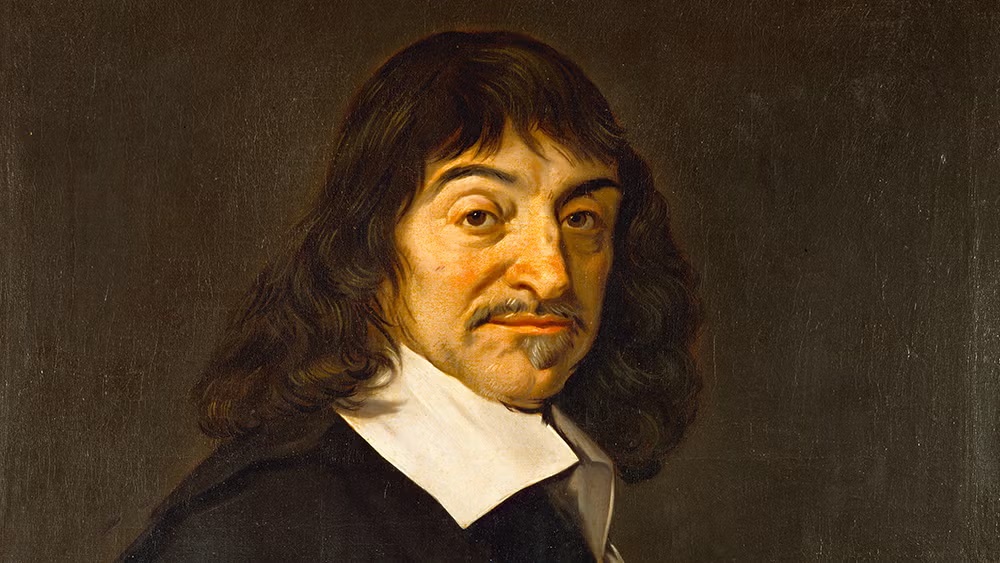
Few ideas in the history of philosophy have exerted as much influence as the principle commonly summarized by the phrase I think therefore I am – Cogito Ergo Sum, a quote by Rene Descartes. This short statement represents a turning point in how human beings understand knowledge, certainty, and the self. It marks the moment when philosophy shifted decisively inward, making consciousness itself the foundation of inquiry.
Before this shift, much philosophical thinking relied on inherited authorities, metaphysical systems, or theological frameworks. Knowledge was often grounded in tradition or external structures assumed to be reliable. The emergence of modern philosophy challenged this approach by asking a radical question. What can be known with absolute certainty if everything else is subject to doubt.
The answer proposed by Rene Descartes did not rely on sensory experience, tradition, or even mathematics. Instead, it relied on the undeniable fact of thinking itself. This move reshaped philosophy and continues to shape debates about mind, selfhood, and knowledge.
Historical Context and Intellectual Climate
To understand the importance of this idea, it is necessary to consider the intellectual environment of seventeenth century Europe. Scientific discoveries were undermining established worldviews. Astronomy challenged traditional cosmology. Physics questioned Aristotelian explanations of motion and causation. Religious conflicts further destabilized intellectual authority.
In this climate of uncertainty, philosophy faced a crisis. If traditional sources of knowledge could be mistaken, how could certainty be restored. Descartes responded by adopting a method of systematic doubt. He proposed that anything that could be doubted should be set aside until something indubitable could be found.
This method did not aim at skepticism for its own sake. Its purpose was constructive. By clearing away unreliable beliefs, Descartes hoped to establish a secure foundation for knowledge.
The Method of Doubt: I Think, Therefore I Am?
The method of doubt begins by questioning the reliability of the senses. Sensory perception can deceive. Objects may appear different under varying conditions. Dreams can feel as vivid as waking life. Even mathematical reasoning could, in principle, be distorted by a powerful deceiver.
At first glance, this radical doubt seems to undermine all knowledge. However, the act of doubting itself reveals something crucial. Doubt is a form of thinking. Even if every belief about the external world is mistaken, the act of thinking remains undeniable.
This realization leads directly to the insight summarized in the statement I think therefore I am. The certainty here does not depend on what is being thought, but on the fact that thinking occurs at all. Existence is affirmed through consciousness.
The Logical Structure of the Insight
The logical force of the claim lies in its immediacy. It is not derived from inference or observation. It is grasped directly through reflection. To deny it would require thinking, which would immediately confirm it.
For this reason, Descartes regarded it as a self validating truth. It does not rely on premises that could be doubted. It stands as the first secure point in the reconstruction of knowledge.
This insight is often expressed in its Latin formulation, cogito ergo sum, which emphasizes its role as a foundational principle. While later philosophers debated whether it should be understood as an argument or an intuition, its certainty was rarely questioned.
Meaning and Interpretation of Cogito Ergo Sum
The I think therefore I am meaning has been interpreted in multiple ways over the centuries. Some readers treat it as a logical argument, while others view it as an immediate awareness of existence. Descartes himself emphasized its intuitive character. It is something known directly, not concluded through reasoning.
Importantly, the statement does not claim that thinking causes existence. It does not assert a metaphysical relationship between thought and being. Instead, it identifies thinking as the point at which existence becomes indubitable.
This distinction is often overlooked. The claim does not say that existence depends on thought in a causal sense. It says that existence is known through thought. This subtlety has significant implications for later debates in metaphysics and epistemology.
The Role of Consciousness
By grounding certainty in consciousness, Descartes elevated the role of the thinking subject. The self became the starting point for philosophical inquiry. This shift had far reaching consequences.
Modern discussions of subjectivity, personal identity, and self awareness all trace their lineage to this moment. Philosophy began to focus not only on what exists, but on how existence is experienced and known.
This inward turn also raised new philosophical questions. If knowledge begins with the self, how can knowledge of the external world be justified. How can other minds be known. These problems became central themes in modern philosophy.
Misunderstandings and Popular Usage
Over time, the phrase I think therefore I am entered popular culture, often detached from its philosophical context. It is frequently used as a slogan affirming individuality or intelligence. While these uses capture something of its spirit, they often miss its precise philosophical function.
The statement is not primarily about self confidence or intellectual pride. It is about certainty under conditions of radical doubt. Its significance lies in what cannot be denied, even when everything else is questioned.
The I think therefore I am quote is often shortened, paraphrased, or humorously adapted. These adaptations reflect its cultural impact, but they should not be confused with its original philosophical role.
Authorship and Attribution
Questions about authorship are surprisingly common. Students and general readers alike sometimes ask who said I think therefore I am. The answer is clear. Rene Descartes articulated this principle in the seventeenth century as part of his broader philosophical project.
Descartes presented the idea in several works, including the Discourse on Method and the Meditations on First Philosophy. In these texts, the insight serves as the foundation upon which further knowledge is built.
Understanding its authorship helps situate it historically and philosophically. It is not an isolated aphorism but part of a systematic effort to secure the foundations of knowledge.
Latin Formulation and Precision
The Latin expression cogito ergo sum captures the structure of the insight with great economy. Its phrasing reflects the philosophical language of Descartes’s time, when Latin served as the lingua franca of scholarly discourse.
There is also a closely related formulation, cogito, ergo sum, which appears in some contexts and translations. While the difference may seem minor, punctuation can influence interpretation. Some scholars argue that the comma emphasizes the reflective pause between thinking and recognition of existence.
Regardless of punctuation, the underlying insight remains the same. Thought reveals existence with absolute certainty.
Philosophical Influence and Criticism
The influence of Descartes’s insight extends across centuries. Rationalist philosophers built upon it to develop systematic metaphysics. Empiricists responded by questioning the role of innate ideas and emphasizing experience. Kant later transformed the debate by examining the conditions of possible experience itself.
Critics have raised objections. Some argue that the self affirmed is too abstract. Others question whether existence truly follows from thinking or whether the insight presupposes what it claims to establish.
Despite these critiques, the central insight remains influential. Even philosophers who reject Descartes’s conclusions often acknowledge the importance of his method and starting point.
The Self and Personal Identity
One of the most enduring questions raised concerns personal identity. What exactly is the self that is affirmed through thinking. Is it a substance, a process, or something else entirely.
Descartes initially described the self as a thinking thing. This characterization emphasizes mental activity rather than physical embodiment. Later philosophers challenged this dualism, arguing that mind and body cannot be so easily separated.
Nevertheless, the idea that self awareness provides a unique form of certainty continues to shape debates about consciousness and identity.
Knowledge and Its Limits
By grounding knowledge in self awareness, Descartes highlighted both the power and the limits of human reason. The certainty of self existence stands in contrast to the uncertainty of much else.
This contrast raises important questions. How far can certainty be extended beyond the self. Can knowledge of the external world achieve the same level of assurance. Descartes attempted to answer these questions through arguments about God and clear and distinct ideas, but these arguments remain controversial.
Even so, the initial certainty provided by thinking remains a reference point in discussions of epistemology.
Modern Relevance
In contemporary philosophy, cognitive science, and artificial intelligence, questions about consciousness and self awareness remain central. While the frameworks have changed, the core issue persists. What does it mean to be a thinking subject.
The insight expressed by I think therefore I am continues to resonate because it addresses something fundamental. It captures the moment when existence becomes undeniable through experience.
Modern debates may reinterpret or critique Descartes’s conclusions, but the starting point he identified remains difficult to dismiss.
Educational Importance
In philosophy education, it often serves as an introduction to modern thought. It illustrates how philosophical problems can arise from simple but rigorous reflection.
Students encountering the idea for the first time often find it striking. It demonstrates that philosophy does not require specialized equipment or empirical data. Careful thinking alone can reveal deep truths.
This pedagogical value helps explain why the phrase remains widely taught and discussed.
Cultural Impact
Beyond philosophy, the idea has influenced literature, psychology, and popular discourse. Writers and artists have explored themes of self awareness and identity inspired by Cartesian thought.
While these cultural expressions often depart from strict philosophical usage, they testify to the enduring appeal of the insight. The connection between thought and existence remains a powerful motif.
The second appearance of the I think therefore I am quote in cultural contexts often emphasizes individuality and self recognition. Though simplified, these uses reflect the original emphasis on consciousness.
Clarifying Common Confusions
It is important to clarify that the statement does not imply that only thinking beings exist. Nor does it claim that existence depends on continuous thought. Its scope is epistemological, not metaphysical in that sense.
The I think therefore I am meaning concerns what can be known with certainty, not what exists in general. This distinction helps avoid many misunderstandings.
Similarly, the question of who said I think therefore I am is not merely historical trivia. It points to the broader philosophical project within which the statement functions.
Lasting Significance
The final significance lies in its simplicity and depth. It shows that certainty begins not with external authority but with reflection on experience itself.
The Latin formulation cogito ergo sum remains a concise expression of this insight. Its continued relevance demonstrates the enduring power of philosophical reflection.
Even today, when scientific knowledge has advanced far beyond the seventeenth century, the basic problem Descartes addressed remains. How can we be certain of anything at all.
Conclusion
The insight expressed by I think therefore I am represents a foundational moment in the history of philosophy. It marks the emergence of modern thought and the central role of consciousness in understanding knowledge.
Through the method of doubt, Descartes identified something that cannot be denied. Thought itself reveals existence. This simple realization reshaped philosophy and continues to influence contemporary debates.
Whether approached historically, logically, or existentially, it remains a powerful reminder of philosophy’s capacity to uncover certainty through reflection alone.