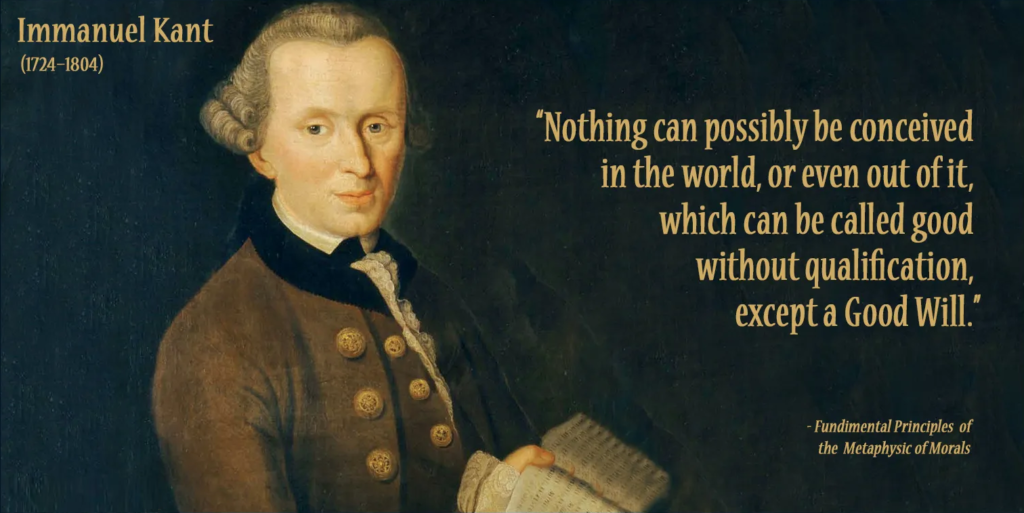
The books of Immanuel Kant occupy a central place in modern philosophy. They mark a turning point in how reason, knowledge, morality, and freedom are understood. Reading Kant is not simply an encounter with another philosophical system, but an encounter with the foundations of modern thought itself. Many debates in contemporary philosophy, ethics, politics, and even science still operate within conceptual boundaries that Kant helped to define.
Kant wrote at a moment when philosophy faced a crisis. Rationalism claimed that reason alone could discover truth about the world, while empiricism insisted that all knowledge comes from experience. Both positions led to serious difficulties. Rationalism risked building systems detached from reality, while empiricism struggled to explain necessity, universality, and scientific certainty. Immanuel Kant’s books are an attempt to resolve this conflict by redefining what reason can and cannot legitimately claim.
The guiding question behind Kant’s major works is deceptively simple: what are the conditions that make knowledge, morality, and judgment possible at all. Instead of asking what the world is like in itself, Kant asks how the human mind structures experience. This shift, often described as a revolution in philosophy, changes the task of philosophy from describing reality directly to examining the limits and powers of human cognition.
Immanuel Kant’s books are demanding because they are systematic. He does not write essays in the loose sense, but carefully constructed arguments that build step by step. Concepts are introduced with precision and used consistently. Terms such as reason, understanding, intuition, duty, freedom, and autonomy have specific meanings that differ from everyday usage. For this reason, Kant cannot be read casually. His works reward slow reading, rereading, and patient effort.
The most influential of Kant’s books are his three Critiques. In the first, he examines the scope and limits of theoretical knowledge, asking what we can know and why. In the second, he turns to moral philosophy, arguing that moral obligation arises from reason itself rather than from external authority, emotion, or social custom. In the third, he explores judgment, aesthetics, and purposiveness, attempting to bridge the gap between nature and freedom. Together, these philosophy books form a unified project aimed at securing human dignity, responsibility, and rational autonomy without relying on metaphysical dogma.
Alongside these major works, Kant wrote numerous shorter texts that clarify, apply, and sometimes soften his critical philosophy. These include writings on ethics, political philosophy, religion, history, and enlightenment. In them, Kant addresses practical questions about law, rights, education, peace, and the role of reason in public life. These books show that Kant was not only concerned with abstract theory, but also with the moral and political conditions of modern society.
One reason Kant’s books remain difficult for modern readers is that they resist reduction. They cannot be turned into slogans or simplified into motivational advice. Kant does not offer comfort. He offers responsibility. Freedom, in his philosophy, is not the ability to do whatever one wants, but the capacity to bind oneself to rational law. Knowledge is not passive reception, but active structuring of experience. Morality is not a matter of inclination, but of duty grounded in reason.
At the same time, Immanuel Kant’s books are deeply human. They are driven by a concern for human finitude. Kant insists that reason has limits, and that many philosophical errors arise from ignoring those limits. Yet he also insists that within those limits, reason is powerful enough to ground science, morality, and dignity. This balance between humility and rigor gives Kant’s philosophy its distinctive tone.
For readers approaching Kant for the first time, it is important to understand that his books are not meant to be consumed quickly. They are meant to reshape how one thinks. Progress often comes in stages, with confusion preceding clarity. Many readers find that Kant’s ideas only fully emerge after time has passed and connections have settled.
An introduction to Kant’s books, therefore, is not a promise of ease, but an invitation to seriousness. To read Kant is to accept the challenge of thinking carefully about what it means to know, to act, and to be free. Few philosophers demand as much effort, and few repay that effort as richly.
Books by Immanuel Kant
Below is a structured list of Immanuel Kant’s principal books and major philosophical works. The list focuses on works that form the core of his philosophical system, along with his most influential applied writings.
Major Critical Works:
Critique of Pure Reason
Critique of Practical Reason
Critique of Judgment
Preparatory and Explanatory Works:
Prolegomena to Any Future Metaphysics
Moral Philosophy:
Groundwork of the Metaphysics of Morals
Metaphysics of Morals
Religion and Anthropology:
Religion within the Bounds of Bare Reason
Anthropology from a Pragmatic Point of View
Political and Historical Philosophy:
Perpetual Peace
Idea for a Universal History with a Cosmopolitan Aim
Enlightenment and Public Reason:
What Is Enlightenment?
This list represents the essential Kantian canon. Together, these books outline Kant’s systematic project on knowledge, morality, freedom, law, judgment, religion, and the role of reason in human life.
Quotes by Immanuel Kant
Below is a curated list of Immanuel Kant’s most widely cited and influential quotations. These lines capture the core themes of his philosophy: reason, morality, freedom, duty, and enlightenment. Wording may vary slightly by translation.
- “Sapere aude. Dare to know.”
Kant’s most famous motto, expressing the essence of enlightenment as intellectual courage and independence. - “Enlightenment is man’s emergence from his self incurred immaturity.”
A definition of enlightenment that places responsibility on the individual rather than external authority. - “Act only according to that maxim whereby you can at the same time will that it should become a universal law.”
The classic formulation of the categorical imperative, central to Kant’s moral philosophy. - “Two things fill the mind with ever new and increasing admiration and awe: the starry heavens above me and the moral law within me.”
One of Kant’s most poetic statements, linking natural order and moral obligation. - “In law a man is guilty when he violates the rights of others. In ethics he is guilty if he only thinks of doing so.”
A clear distinction between legal wrongdoing and moral responsibility. - “Experience without theory is blind, but theory without experience is mere intellectual play.”
A concise expression of Kant’s attempt to reconcile empiricism and rationalism. - “Freedom is independence from the compulsory will of another.”
Kant’s political and moral conception of freedom grounded in autonomy and law. - “Immaturity is the inability to use one’s understanding without the guidance of another.”
A diagnosis of why people submit to authority instead of exercising reason. - “Morality is not the doctrine of how we may make ourselves happy, but of how we may make ourselves worthy of happiness.”
A rejection of ethics based on pleasure or outcome alone. - “Thoughts without content are empty, intuitions without concepts are blind.”
A foundational insight from his theory of knowledge about how understanding works. - “A lie is the abandonment and annihilation of human dignity.”
An uncompromising statement reflecting Kant’s strict stance on truthfulness. - “Science is organized knowledge. Wisdom is organized life.”
A distinction between knowing facts and living according to reason. - “He who is cruel to animals becomes hard also in his dealings with men.”
An ethical observation linking moral character and treatment of living beings. - “Out of the crooked timber of humanity, no straight thing was ever made.”
A realistic assessment of human imperfection in moral and political life. - “Rules for happiness can be given, rules for morality must be discovered.”
A summary of Kant’s view that morality is grounded in reason, not instruction.
These quotations represent Kant’s lasting influence on ethics, epistemology, politics, and the idea of enlightenment itself. They are often encountered as isolated lines, but their full meaning becomes clearer when read within the structure of his broader philosophical system.