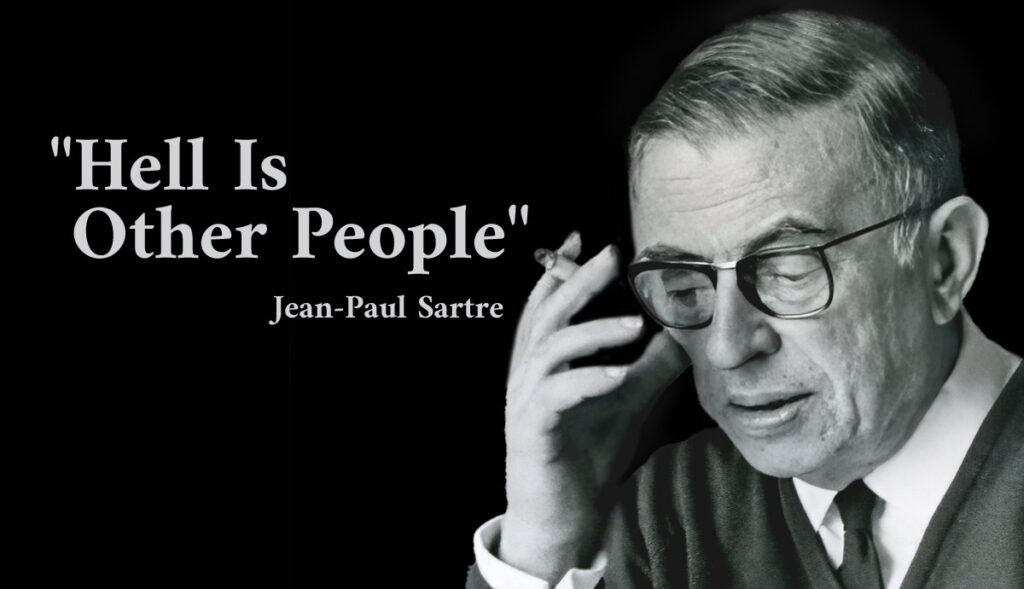
Jean-Paul Sartre is widely regarded as one of the most important philosophers of the twentieth century. His writings shaped modern existentialist thought and influenced literature, politics, psychology, and cultural theory. While Sartre wrote complex philosophical works, many of his ideas are often encountered through memorable statements and reflections that summarize his view of human existence. Jean-Paul Sartre quotes capture the essence of his philosophy by presenting deep insights about freedom, responsibility, and the challenges of living in a world without predetermined meaning.
Sartre believed that philosophy should not remain confined to abstract argument alone. Instead, it should illuminate the conditions of everyday human life. For this reason, many of his most well-known statements appear not only in philosophical works but also in novels, essays, plays, and lectures. His reflections often condense complicated philosophical arguments into striking expressions that provoke reflection about how people understand themselves and their choices.
Freedom as the Core of Human Existence
One of the most central themes in Sartre’s philosophy is the idea that human beings are fundamentally free. According to Sartre, people are not defined by fixed essences or predetermined roles. Instead, they continually create themselves through their decisions and actions.
A famous Jean-Paul Sartre quote expresses this idea clearly:
“Man is condemned to be free.”
This statement appears paradoxical at first. Freedom is usually considered a privilege, yet Sartre describes it almost as a burden. His point is that individuals cannot escape the responsibility of choosing. Even refusing to choose is itself a choice. Human beings therefore cannot avoid freedom, because every action contributes to defining who they are.
Another reflection related to this idea states:
“Freedom is what you do with what’s been done to you.”
This statement emphasizes that human freedom does not mean unlimited power. People are born into circumstances they did not choose. Social conditions, history, and personal situations shape the possibilities available to them. Nevertheless, individuals remain responsible for how they respond to those circumstances.
Responsibility and Moral Choice
Because Sartre believed that human beings create their own values, he argued that individuals bear full responsibility for their actions. This responsibility extends beyond personal consequences. In Sartre’s view, each choice implicitly expresses a vision of what human life should be.
A well-known Jean-Paul Sartre quote reflects this idea:
“When we choose for ourselves, we choose for all mankind.”
Sartre meant that human actions have a universal dimension. When a person acts in a certain way, they are implicitly affirming that such behavior is acceptable for others as well. This insight connects individual freedom with ethical responsibility. Choices are never purely private decisions; they contribute to shaping the moral world in which others live.
This emphasis on responsibility often appears in Sartre’s discussions of authenticity. Authentic living requires acknowledging freedom rather than hiding from it. Sartre criticized the tendency to blame circumstances, traditions, or authority figures for personal decisions. According to him, individuals must recognize that they themselves are the authors of their actions.
The Idea of “Bad Faith”
One of Sartre’s most influential philosophical concepts is the notion of “bad faith.” Bad faith refers to the attempt to escape responsibility by pretending that one’s identity or role determines one’s actions completely. In everyday life, people often behave as though their social position, profession, or character leaves them no choice.
A Jean-Paul Sartre quote illustrating this problem states:
“We are our choices.”
This brief statement summarizes Sartre’s view that identity is not fixed but continuously created through action. When individuals claim that they cannot act differently because of their role or personality, they are engaging in bad faith. They deny their own freedom in order to avoid responsibility.
Sartre believed that this denial of freedom is a common feature of modern life. People often prefer the comfort of believing that their lives are predetermined rather than confronting the uncertainty that accompanies genuine freedom.
The Presence of Other People
Another important theme in Sartre’s thought concerns the relationship between the self and others. Human identity is not formed in isolation. Individuals become aware of themselves partly through the gaze and judgment of other people.
One of Sartre’s most famous statements from his play No Exit captures this idea:
“Hell is other people.”
This quote is often misunderstood as a simple expression of hostility toward others. In its philosophical context, however, Sartre was describing how social interaction can create tension and conflict. When individuals become aware that others are observing and evaluating them, they may feel constrained or judged. This experience can produce discomfort because it reveals that identity is partly shaped by external perspectives.
At the same time, Sartre did not claim that relationships with others are entirely negative. Instead, he highlighted the complex dynamics that arise when individuals attempt to assert their freedom while simultaneously being recognized by others.
Meaning in a World Without Predetermined Purpose
Existentialist philosophy often confronts the idea that life has no predetermined meaning. Sartre argued that the absence of inherent purpose does not lead to despair. Instead, it opens the possibility for individuals to create meaning through their actions.
A well-known Jean-Paul Sartre quote expresses this perspective:
“Life has no meaning the moment you lose the illusion of being eternal.”
This statement reflects Sartre’s belief that recognizing the finite nature of human existence changes how people understand their lives. Instead of relying on predetermined meanings or external guarantees, individuals must actively shape the significance of their actions.
For Sartre, meaning is not discovered but created. Human beings define themselves through their projects, commitments, and relationships. The absence of predetermined purpose therefore becomes an opportunity for creative self-definition.
Engagement with Society and Politics
Sartre did not view philosophy as an isolated intellectual activity. He believed that thinkers and writers should engage with social and political issues. Many Jean-Paul Sartre quotes reflect this commitment to public responsibility.
He argued that intellectual work carries ethical obligations. Writers and philosophers cannot remain indifferent to injustice or oppression. Their ideas influence society and therefore must confront political realities.
Sartre’s own life reflected this belief. He participated in debates about colonialism, war, and social inequality. Through essays and public speeches, he attempted to connect philosophical reflection with practical action in the world.
The Continuing Influence of Sartre’s Words
Jean-Paul Sartre quotes remain widely discussed because they express philosophical ideas in a concise and memorable form. His reflections continue to inspire debate about freedom, identity, and moral responsibility.
Although Sartre’s philosophical works can be challenging, many readers first encounter his ideas through these brief statements. The quotes often serve as entry points into deeper philosophical questions. They encourage reflection about how individuals understand their choices, relationships, and responsibilities.
Sartre’s influence extends far beyond academic philosophy. Writers, filmmakers, psychologists, and political thinkers have drawn inspiration from his ideas. His emphasis on freedom and responsibility continues to shape discussions about ethics, personal identity, and social commitment.
Conclusion
Jean-Paul Sartre quotes capture the central themes of existentialist philosophy in powerful and memorable language. Through statements about freedom, responsibility, and human relationships, Sartre invites readers to confront the reality that individuals must create meaning in their own lives.
His reflections challenge the comforting idea that identity or destiny is predetermined. Instead, they emphasize the creative and demanding nature of human existence. By recognizing their freedom and responsibility, individuals can shape their lives through conscious choice and commitment.
For this reason, Sartre’s words continue to resonate with readers who seek to understand the philosophical challenges of modern life. His insights remind us that human existence is defined not by what we are given, but by what we choose to become.