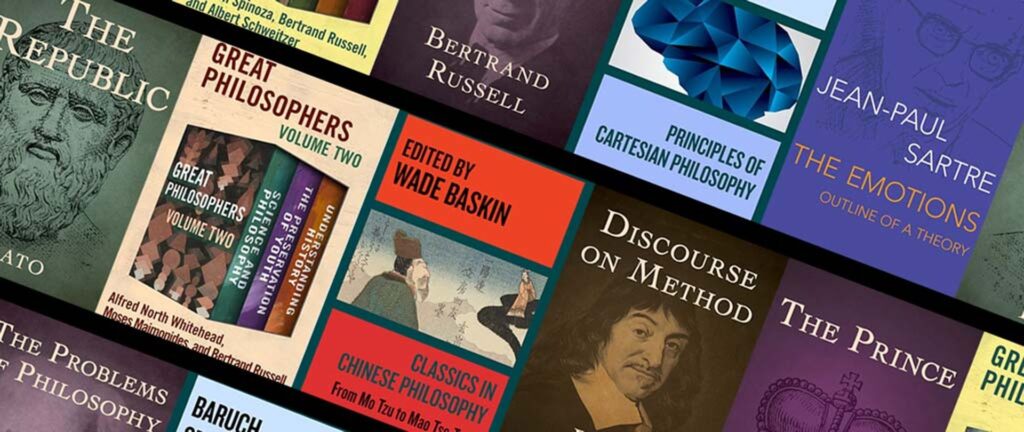
Philosophy books are among the most enduring works of human thought. They challenge assumptions, expand worldviews, and deepen our understanding of reality, morality, knowledge, and human existence. Unlike technical manuals or topical nonfiction, philosophy books do not become obsolete when circumstances change. Their subject matter is human reason itself, and for that reason they remain relevant across centuries. Whether you are a beginner or an experienced reader of philosophical literature, there are books that can expand your thinking, invite you into complex debates, and remain intellectually rewarding across a lifetime of re reading.
This guide gathers and categorizes influential philosophy books across multiple perspectives, from foundational introductions to classic masterpieces and contemporary works that push the boundaries of philosophical inquiry. The aim is not to impose a single canon, but to present a broad reading map that reflects the diversity of philosophical traditions and interests.
What Makes a Philosophy Book Important
A good philosophy book is not defined simply by clarity or popularity. Many of the most important philosophical books are difficult, demanding, and even frustrating on first encounter. Philosophical works become important when they pose fundamental questions about knowledge, existence, ethics, or society, offer original insight or reinterpret traditional problems, engage readers intellectually and provoke sustained reflection, and endure historically while influencing later generations of thinkers. A philosophy book earns its status through the depth of the problems it opens, not through the ease of its answers.
Best Philosophy Books of All Time
Plato – The Republic
Plato – Symposium
Aristotle – Nicomachean Ethics
Aristotle – Metaphysics
Augustine – Confessions
Plotinus – The Enneads
Thomas Aquinas – Summa Theologica
Rene Descartes – Meditations on First Philosophy
Baruch Spinoza – Ethics
John Locke – An Essay Concerning Human Understanding
David Hume – An Enquiry Concerning Human Understanding
Immanuel Kant – Critique of Pure Reason
G W F Hegel – Phenomenology of Spirit
Arthur Schopenhauer – The World as Will and Representation
Søren Kierkegaard – Either Or
Karl Marx – Capital
Friedrich Nietzsche – Beyond Good and Evil
Friedrich Nietzsche – Thus Spoke Zarathustra
Martin Heidegger – Being and Time
Ludwig Wittgenstein – Philosophical Investigations
Edmund Husserl – Ideas Pertaining to a Pure Phenomenology
Hannah Arendt – The Human Condition
Jean Paul Sartre – Being and Nothingness
Michel Foucault – Discipline and Punish
Karl Popper – The Open Society and Its Enemies
Philosophy Books for Beginners
Plato – Apology
Plato – Crito
Marcus Aurelius – Meditations
Epictetus – Enchiridion
Seneca – Letters from a Stoic
Bertrand Russell – The Problems of Philosophy
Thomas Nagel – What Does It All Mean
Simon Blackburn – Think
Julian Baggini – Philosophy A Very Short Introduction
Nigel Warburton – A Little History of Philosophy
Will Durant – The Story of Philosophy
Albert Camus – The Myth of Sisyphus
Jean Paul Sartre – Existentialism Is a Humanism
Mary Midgley – What Is Philosophy For
Philosophical Books Everyone Should Read
Michel de Montaigne – Essays
Blaise Pascal – Pensées
Simone Weil – Gravity and Grace
Isaiah Berlin – Four Essays on Liberty
George Santayana – The Life of Reason
Friedrich Nietzsche – Twilight of the Idols
Arthur Schopenhauer – Essays and Aphorisms
Albert Camus – The Rebel
Hannah Arendt – Eichmann in Jerusalem
Bertrand Russell – Why I Am Not a Christian
Best Books on Philosophy (General Overviews)
Bryan Magee – The Story of Philosophy
Anthony Kenny – A New History of Western Philosophy
A C Grayling – The History of Philosophy
Roger Scruton – Modern Philosophy
Nigel Warburton – Philosophy The Basics
Simon Critchley – The Book of Dead Philosophers
Philosophy Books by Area of Interest
Ethics and Morality
Immanuel Kant – Groundwork of the Metaphysics of Morals
John Stuart Mill – Utilitarianism
Alasdair MacIntyre – After Virtue
Bernard Williams – Ethics and the Limits of Philosophy
G E M Anscombe – Intention
Philippa Foot – Virtues and Vices
Peter Singer – Practical Ethics
Martha Nussbaum – The Fragility of Goodness
Political and Social Philosophy
Thomas Hobbes – Leviathan
John Locke – Second Treatise of Government
Jean Jacques Rousseau – The Social Contract
Alexis de Tocqueville – Democracy in America
John Rawls – A Theory of Justice
Hannah Arendt – On Revolution
Carl Schmitt – The Concept of the Political
Michael Sandel – Justice
Mind, Knowledge, and Reality
David Hume – A Treatise of Human Nature
Immanuel Kant – Prolegomena to Any Future Metaphysics
Thomas Kuhn – The Structure of Scientific Revolutions
Karl Popper – The Logic of Scientific Discovery
Gilbert Ryle – The Concept of Mind
Daniel Dennett – Consciousness Explained
Patricia Churchland – Neurophilosophy
Existentialism and Human Experience
Søren Kierkegaard – Fear and Trembling
Søren Kierkegaard – The Sickness Unto Death
Albert Camus – The Plague
Jean Paul Sartre – Nausea
Viktor Frankl – Man’s Search for Meaning
Karl Jaspers – Philosophy of Existence
Maurice Merleau Ponty – Phenomenology of Perception
Gabriel Marcel – Being and Having
Top Philosophy Books to Shape Your Thinking
Michel Foucault – The History of Sexuality
Judith Butler – Gender Trouble
Gilles Deleuze – Difference and Repetition
Jacques Derrida – Of Grammatology
Herbert Marcuse – One Dimensional Man
Theodor Adorno – Minima Moralia
Jean Baudrillard – Simulacra and Simulation
Paul Ricoeur – Time and Narrative
Good Philosophy Books for Contemporary Readers
Alain de Botton – The Consolations of Philosophy
Rebecca Goldstein – Plato at the Googleplex
Byung Chul Han – The Burnout Society
Charles Taylor – Sources of the Self
Slavoj Žižek – The Sublime Object of Ideology
Peter Sloterdijk – Critique of Cynical Reason
Simon Critchley – Infinitely Demanding
Kwame Anthony Appiah – The Ethics of Identity
Best Philosophical Books by Theme
On Free Will
Daniel Dennett – Freedom Evolves
Galen Strawson – Freedom and Belief
Harry Frankfurt – The Importance of What We Care About
Robert Kane – The Significance of Free Will
On Meaning and Existence
Miguel de Unamuno – The Tragic Sense of Life
Martin Heidegger – What Is Metaphysics
Karl Jaspers – Way to Wisdom
Gabriel Marcel – The Mystery of Being
Emil Cioran – The Trouble with Being Born
Jean Wahl – Philosophies of Existence
Paul Tillich – The Courage to Be
Nicolai Berdyaev – The Destiny of Man
Albert Schweitzer – The Philosophy of Civilization
Susan Wolf – Meaning in Life and Why It Matters
Iris Murdoch – The Sovereignty of Good
On Language and Thought
Ludwig Wittgenstein – Tractatus Logico Philosophicus
Saul Kripke – Naming and Necessity
Wilfrid Sellars – Empiricism and the Philosophy of Mind
Noam Chomsky – Language and Mind
Donald Davidson – Inquiries into Truth and Interpretation
J L Austin – How to Do Things with Words
On Determinism and Necessity
Baruch Spinoza – Theological-Political Treatise
Pierre-Simon Laplace – A Philosophical Essay on Probabilities
Isaiah Berlin – Liberty
John Martin Fischer – Responsibility and Control
On Time and Temporality
Henri Bergson – Time and Free Will
Paul Ricoeur – Memory, History, Forgetting
J M E McTaggart – The Nature of Existence
Hermann Weyl – Philosophy of Mathematics and Natural Science
On Consciousness and Subjectivity
Thomas Metzinger – Being No One
David Chalmers – The Conscious Mind
Shaun Gallagher – How the Body Shapes the Mind
Evan Thompson – Mind in Life
On Ethics of Technology and Modernity
Jacques Ellul – The Technological Society
Hans Jonas – The Imperative of Responsibility
Bernard Stiegler – Technics and Time
Langdon Winner – Autonomous Technology
On Power, Authority, and Obedience
Étienne de La Boétie – Discourse on Voluntary Servitude
Max Weber – Economy and Society
Hannah Arendt – On Violence
Michel de Certeau – The Practice of Everyday Life
On Selfhood and Identity
Derek Parfit – Reasons and Persons
Charles Taylor – The Ethics of Authenticity
Paul Ricoeur – Oneself as Another
Alasdair MacIntyre – Dependent Rational Animals
On Skepticism and Certainty
Sextus Empiricus – Outlines of Pyrrhonism
G E Moore – Philosophical Papers
Richard Rorty – Philosophy and the Mirror of Nature
Barry Stroud – The Significance of Philosophical Skepticism
On Death, Mortality, and Finitude
Ernest Becker – The Denial of Death
Vladimir Jankélévitch – Death
Julian Young – Death and the Afterlife
Shelly Kagan – Death
Philosophy books are not meant to be rushed. They reward slow reading, reflection, and return. Together, these works form a broad and layered map of philosophical inquiry across eras, traditions, and enduring human questions.