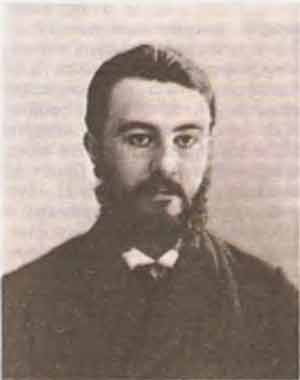
Platon Nikolayevich Krasnov belongs to a restrained yet intellectually rigorous tradition of Russian philosophy that is often overshadowed by more dramatic religious, metaphysical, or revolutionary figures. His importance does not lie in founding a school or proposing a grand speculative system, but in his sustained ethical seriousness, his disciplined engagement with classical antiquity, and his conviction that philosophy is primarily concerned with the formation of character. Krasnov represents a form of philosophical work that is quiet, exacting, and morally demanding, oriented not toward ideological transformation of society but toward the inner stability of the human being.
Krasnov worked in a period when Russian intellectual life was marked by sharp tensions. On the one hand, Western philosophical systems were entering Russia with increasing force, especially German idealism and later positivism. On the other hand, religious and social thought sought to define a specifically Russian path, often emphasizing spiritual destiny, communal salvation, or radical moral renewal. In this environment, Krasnov’s attention to classical moral philosophy may appear modest. In reality, it was a deliberate and philosophically significant stance.
Historical background and intellectual orientation
Russian philosophy in the nineteenth and early twentieth centuries rarely developed as a purely academic discipline. Philosophical reflection was often carried by writers, historians, theologians, and translators. Ideas circulated through essays, lectures, and literary criticism rather than through specialized journals alone. Philosophy was expected to address existential and moral questions directly connected to social life.
Krasnov’s work belongs to this broader intellectual culture, but his tone and method are distinctive. He did not write as a prophet, a social critic, or a metaphysical visionary. Instead, he approached philosophy as a disciplined inquiry into ethical life. His thinking reflects a conviction that moral confusion in modern society cannot be resolved by political slogans or abstract metaphysics. It requires patient attention to the structure of the soul, to judgment, and to responsibility.
His classical education played a decisive role in shaping this orientation. Krasnov was trained in ancient languages and history, which allowed him to engage directly with Greek and Roman texts. This was not merely a scholarly advantage. It formed the basis of his philosophical temperament. Ancient philosophy, especially ethical thought, provided him with a model of intellectual restraint and moral clarity that he believed was lacking in modern discourse.
Philosophy as ethical discipline
A defining feature of Krasnov’s thought is his rejection of philosophy as system building. He did not attempt to construct a comprehensive metaphysical account of reality. Nor did he seek to ground ethics in speculative principles. For Krasnov, philosophy was not primarily about explaining the world, but about learning how to live within it.
This view aligns him closely with ancient philosophy understood as a practical discipline. In antiquity, philosophy was not separated from life. It was a way of training the mind and shaping conduct. Krasnov explicitly adopted this understanding. Ethical reflection, in his view, must lead to transformation of judgment, not merely accumulation of knowledge.
He regarded moral life as something that unfolds in concrete situations rather than abstract dilemmas. Philosophy therefore had to address fear, ambition, resentment, suffering, and uncertainty. These were not peripheral issues. They were the core material of ethical thought.
The centrality of character
At the heart of Krasnov’s philosophy lies the concept of character. He believed that moral integrity depends less on external rules than on inner orientation. Laws and social norms may guide behavior, but they cannot substitute for stable judgment. A person without character, in Krasnov’s sense, remains vulnerable to circumstance, opinion, and passion.
Character for Krasnov is not an innate trait but a cultivated disposition. It is formed through reflection, self discipline, and repeated ethical choice. This process requires effort and patience. There is no sudden moral conversion that resolves ethical life once and for all.
This emphasis distinguishes Krasnov from moral theories that rely heavily on intention or sentiment. He was skeptical of ethical approaches that equated goodness with emotional intensity or moral enthusiasm. Feelings, he argued, are unstable. Without rational guidance, they can easily turn destructive.
Engagement with Stoic philosophy
Krasnov’s engagement with Stoicism is one of the most significant aspects of his intellectual work. He approached Stoic philosophy not as a historical curiosity, but as a coherent ethical framework capable of addressing enduring human problems. Stoic ideas about self control, rational judgment, and acceptance of necessity resonated deeply with his own moral outlook.
He was particularly interested in the Stoic distinction between what depends on us and what does not. This distinction allowed Krasnov to articulate a conception of freedom that avoids both fatalism and illusion. Human beings do not control external events, but they do control their judgments and responses. Ethical freedom therefore consists in governing one’s inner life rather than attempting to dominate the world.
Krasnov saw in Stoicism a powerful antidote to modern moral instability. He believed that many ethical crises arise from the refusal to accept limits. When individuals expect happiness, success, or recognition to be guaranteed by external conditions, disappointment becomes inevitable. Stoic discipline teaches acceptance without resignation and activity without obsession.
Inner freedom and responsibility
A recurring theme in Krasnov’s writing is inner freedom. He rejected the modern tendency to equate freedom with unlimited choice or self expression. Such notions, in his view, often lead to restlessness rather than autonomy. A person ruled by desire or fear is not free, regardless of how many options they possess.
True freedom, for Krasnov, is inseparable from responsibility. It requires understanding the structure of necessity and acting rationally within it. This conception places ethical life firmly within the individual. External conditions may constrain action, but they do not determine judgment.
This view has important moral consequences. It shifts attention away from blaming circumstances and toward self examination. Ethical failure is not explained primarily by social pressure or fate, but by confusion of judgment. Philosophy therefore becomes a practice of clarification rather than accusation.
Moral psychology and the role of passions
Krasnov devoted considerable attention to moral psychology. He did not deny the importance of emotions, but he insisted that passions must be examined rather than indulged. Unreflective emotion, in his view, distorts perception and undermines ethical consistency.
This approach reflects a classical understanding of the soul as a structured whole in which reason has a guiding role. Reason does not suppress emotion. It orders it. Ethical maturity consists in understanding one’s emotional tendencies and integrating them into rational judgment.
Krasnov was particularly critical of resentment and self pity, which he regarded as corrosive passions. These emotions, he argued, trap individuals in fixation on external injury and prevent moral growth. By contrast, disciplined acceptance of hardship strengthens character and preserves dignity.
Suffering and ethical formation
Krasnov’s treatment of suffering is marked by sobriety. He did not romanticize pain, nor did he treat it as meaningless. Suffering, he argued, is an unavoidable aspect of human life. The ethical question is not how to eliminate it completely, but how to respond to it.
In this respect, Krasnov stands close to Stoic endurance while remaining sensitive to human vulnerability. Suffering tests character. It reveals whether a person’s ethical commitments are stable or merely rhetorical. When faced with loss or failure, individuals discover what truly governs their judgment.
Krasnov believed that adversity can become a source of moral clarity. It strips away illusion and forces confrontation with what matters. This view does not justify injustice or cruelty, but it rejects the expectation that ethical life can be painless.
Krasnov as interpreter of antiquity
An important part of Krasnov’s intellectual legacy lies in his work as an interpreter of ancient philosophy. He did not treat interpretation as neutral scholarship. For him, to interpret a philosophical text was to assume responsibility for its ethical meaning.
He sought to present ancient ethical thought in a way that preserved its rigor while making its relevance visible to modern readers. This required precision and restraint. Krasnov resisted simplifying ancient ideas to fit contemporary sensibilities. He believed that philosophy loses its power when it is reduced to slogans.
His interpretive work reflects a deep respect for intellectual tradition. Krasnov regarded philosophy as a cumulative enterprise in which each generation inherits both insight and obligation. To distort inherited ideas for convenience was, in his view, a form of moral failure.
Critique of modern moral superficiality
Krasnov was deeply concerned about what he perceived as moral superficiality in modern culture. He observed a tendency to replace ethical reflection with sentiment, ideology, or collective enthusiasm. Moral language became inflated while moral discipline weakened.
This critique was not directed against progress as such. Krasnov did not advocate a return to the past. Rather, he warned that technical and social advancement does not automatically produce ethical maturity. Without inner discipline, modern life risks becoming morally incoherent.
He argued that the cultivation of character cannot be outsourced to institutions or movements. Ethical responsibility remains irreducibly personal. Philosophy therefore retains a critical role even in highly organized societies.
Place in Russian intellectual history
Krasnov occupies a marginal position in the canon of Russian philosophy, but this marginality is itself revealing. His work lacks the dramatic gestures that often attract attention. There is no prophetic tone, no radical metaphysics, no utopian promise.
Yet precisely for this reason, his philosophy possesses a distinctive integrity. He represents a line of Russian thought committed to ethical clarity rather than ideological intensity. His work shows that Russian philosophy is not exhausted by religious mysticism or revolutionary fervor.
In recent years, renewed interest in ethical philosophy and classical thought has led to a reassessment of figures like Krasnov. His writings speak to contemporary concerns about resilience, responsibility, and the limits of external solutions to moral problems.
Conclusion
Platon Nikolayevich Krasnov stands as a representative of philosophy understood as ethical discipline rather than speculative ambition. His engagement with classical antiquity, especially Stoic ethics, provided him with conceptual tools to address modern moral challenges without surrendering to either pessimism or illusion.
His philosophy emphasizes character, inner freedom, and responsibility. It insists that ethical life begins with self examination and rational judgment. In an age often dominated by moral noise and ideological polarization, Krasnov’s restrained voice remains relevant.
He reminds us that philosophy does not need grand systems to matter. It needs seriousness, patience, and commitment to the care of the soul.