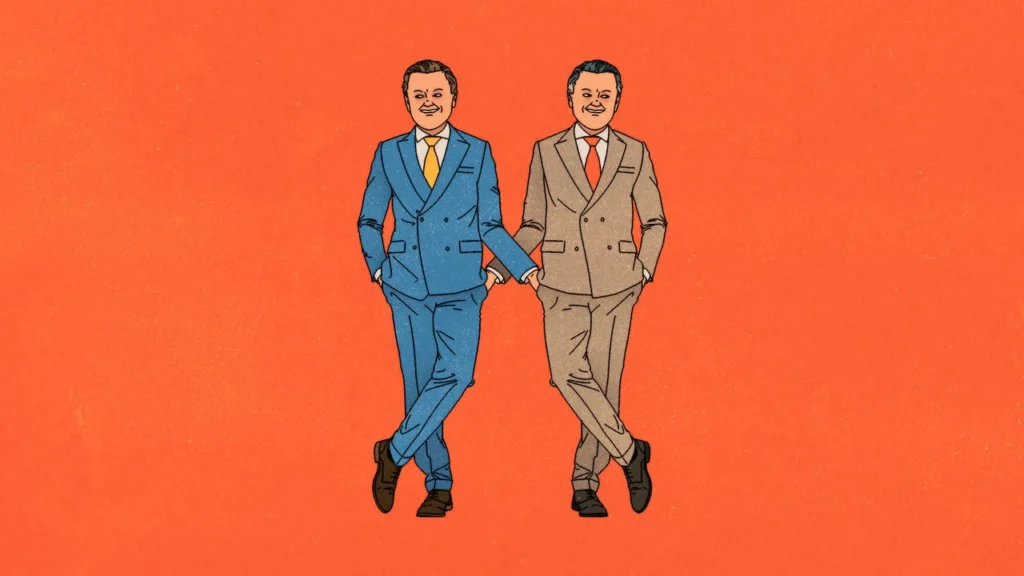
Cronyism is one of the most persistent pathologies of political and economic life. It appears in monarchies and republics, in capitalist and socialist systems, in ancient city states and modern bureaucracies. Its forms vary, yet its structure remains recognizably the same. Access to power, wealth, and opportunity is distributed not according to merit, law, or public purpose, but according to personal loyalty, friendship, kinship, or factional allegiance. Philosophical reflection on cronyism is therefore not merely an exercise in moral condemnation. It is an inquiry into the nature of authority, justice, trust, and institutional decay.
This article approaches cronyism as a philosophical problem rather than a journalistic slogan. It examines how cronyism arises, why it persists, how it reshapes moral reasoning, and what it reveals about the limits of formal rules. Cronyism is not simply corruption in a narrow sense. It is a mode of social organization that competes with law, replaces impersonal norms with personal bonds, and transforms the meaning of responsibility itself.
Cronyism Definition
Cronyism can be defined as the practice of favoring friends, relatives, or loyal associates in the allocation of positions, contracts, privileges, or protections, regardless of merit or formal criteria. Unlike isolated acts of bribery or fraud, cronyism functions as a stable pattern of preference. It is embedded in networks of mutual obligation and expectation.
From a philosophical standpoint, this definition highlights two essential features. First, cronyism presupposes discretionary power. The actor who practices cronyism must have sufficient authority to bend rules, interpret standards selectively, or bypass procedures. Second, cronyism depends on personal relationships that override impersonal norms. The crony is not simply someone who benefits. The crony is someone whose access is grounded in loyalty rather than qualification.
This distinguishes cronyism from mere nepotism, which is restricted to family ties, and from clientelism, which often involves mass political exchange. Cronyism is narrower and more intimate. It thrives in the gray zones of institutions where oversight is weak and accountability is diffuse.
Cronyism Meaning
The deeper meaning of cronyism lies not in favoritism alone, but in its redefinition of social trust. In a cronyistic system, trust is no longer placed in rules, offices, or procedures. It is placed in persons and networks. One trusts not the institution, but the person who controls access to it.
This shift has profound philosophical implications. Institutions exist precisely to replace personal dependence with predictable norms. Law abstracts from personal identity. Merit systems attempt to align reward with competence. Cronyism reverses this logic. It re personalizes power and collapses the distinction between public role and private loyalty.
As a result, the meaning of justice changes. Justice ceases to be about fair treatment under shared standards. It becomes a matter of belonging. Those inside the network experience the system as functional and even moral. Those outside experience it as arbitrary and hostile. Cronyism therefore generates moral asymmetry. The same act is perceived as loyalty from within and as corruption from without.
Cronyism and the problem of justice
Classical theories of justice emphasize impartiality. From ancient legal codes to modern constitutional thought, justice requires that like cases be treated alike. Cronyism violates this principle at its core. Yet it often survives precisely because it appeals to a rival moral intuition. Loyalty to friends and allies is widely regarded as a virtue in personal life.
The philosophical tension arises when personal virtue is imported into public office. The official who favors a loyal associate may sincerely believe that he is rewarding trustworthiness. The problem is not that loyalty is immoral in itself. The problem is that public authority transforms the moral context. What is virtuous in friendship becomes unjust in governance.
This tension reveals a deeper question. Are public roles morally distinct from private roles, or are they merely extensions of personal character. Cronyism implicitly denies the distinction. It treats public power as an extension of personal agency. The state becomes a possession rather than a trust.
What is cronyism
At its most basic level, cronyism is the substitution of personal relationships for objective standards in collective decision making. It occurs when access to resources, authority, or protection depends less on competence or legality and more on proximity to power. This makes cronyism different from random unfairness. It is structured, predictable, and relational. Those who understand the network know how outcomes will be decided, while those outside it remain formally equal but practically excluded. In this sense, cronyism creates a dual reality: an official order governed by rules, and an effective order governed by personal ties.
Power, discretion, and moral temptation
Cronyism flourishes where discretion is high and transparency is low. From a philosophical angle, discretion is not inherently corrupting. It is often necessary for judgment. Yet discretion creates moral temptation. When rules do not fully determine outcomes, personal preference enters the decision space.
The moral danger lies in the gradual normalization of exception making. One favor leads to another. Each exception is justified by context, urgency, or loyalty. Over time, the rule becomes nominal while the exception becomes habitual. The agent no longer experiences himself as breaking norms. He experiences himself as navigating reality.
This process illustrates how moral reasoning adapts to power. Instead of asking whether an action is just, the actor asks whether it is feasible, useful, or stabilizing. Cronyism thus reshapes practical reason. It replaces ethical universality with situational calculation.
Cronyism and institutional decay
Institutions are designed to outlast individuals. Their legitimacy depends on predictability and fairness. Cronyism corrodes both. When outcomes depend on personal ties, institutional memory is replaced by personal memory. Knowledge is hoarded rather than documented. Authority fragments into informal centers.
Philosophically, this represents a regression from rule based order to personal rule. It is not accidental that cronyism often accompanies weak states. Where enforcement is selective, networks compensate. Where law is unreliable, relationships become insurance.
Yet this adaptation has a cost. Institutions lose credibility. Citizens learn that compliance is less effective than connection. Cynicism becomes rational. Over time, this undermines civic virtue itself. Why respect rules that no one else takes seriously.
The moral psychology of the crony
Cronyism is sustained not only by structure but by self interpretation. The crony rarely views himself as corrupt. He sees himself as trusted, proven, and loyal. He interprets his advantage as recognition rather than favoritism.
This self conception is reinforced by reciprocity. Cronyistic networks operate on mutual benefit. Favors are repaid. Betrayal is punished. Within the network, norms are clear and often strictly enforced. From the inside, the system appears moral, even honorable.
Philosophically, this challenges simplistic accounts of vice. Cronyism is not merely greed. It is a misplacement of virtue. Loyalty, gratitude, and solidarity are detached from their proper domain and applied where impartiality is required.
Cronyism and merit
Modern societies often define legitimacy through merit. Education, credentials, and performance are meant to justify authority. Cronyism undermines this narrative. It reveals the fragility of meritocratic ideals when confronted with informal power.
From a philosophical perspective, merit itself is not a neutral concept. It presupposes shared criteria of value. Cronyism exposes the tension between formal merit and perceived reliability. A loyal associate may be less qualified on paper, yet more predictable in practice.
This raises an uncomfortable question. Is competence sufficient for trust. Or does trust inevitably rely on personal knowledge. Cronyism answers in favor of the latter, but at the cost of fairness. It privileges certainty over openness.
Cronyism as a form of social order
It is tempting to view cronyism as mere disorder. In reality, it is an alternative order. It organizes access through networks rather than rules. It stabilizes power through loyalty rather than legitimacy.
Anthropologically, such systems are ancient. Before bureaucratic states, power was personal. Oaths, kinship, and patronage structured society. Cronyism can thus be seen as the persistence of pre modern logic within modern forms.
The philosophical problem is not simply that cronyism is old, but that it coexists with institutions that claim universalism. This coexistence creates contradiction. The surface promises equality. The underlying practice delivers hierarchy.
Political authority and personal loyalty
Political philosophy has long wrestled with the source of authority. Is authority derived from law, consent, tradition, or force. Cronyism aligns authority with personal loyalty. Power flows through relationships rather than norms.
This model of authority is inherently unstable. Loyalty is contingent. It shifts with interest and fear. Without impersonal constraints, power becomes personalized and therefore vulnerable. Succession becomes a crisis. Trust becomes brittle.
From a philosophical standpoint, this explains why cronyistic regimes often oscillate between rigidity and chaos. They enforce loyalty harshly while lacking durable legitimacy.
Cronyism and moral responsibility
In cronyistic systems, responsibility is diffused. Decisions are justified by reference to relationships rather than rules. The official claims he had no choice but to reward loyalty. The crony claims he merely accepted an offer.
This diffusion undermines moral accountability. If everyone acts according to network expectations, no one feels individually responsible. Moral agency dissolves into collective habit.
Philosophically, this challenges the notion of personal responsibility in structural wrongdoing. Cronyism is sustained by ordinary actions that seem harmless in isolation. The injustice lies in the pattern, not the single act.
Can cronyism be eliminated
The philosophical answer is sobering. Cronyism cannot be fully eliminated by rules alone. Formal procedures are necessary but insufficient. Where discretion exists, personal preference will intrude.
The deeper remedy lies in cultural norms that reinforce the distinction between public role and private loyalty. This requires moral education as much as legal reform. Officials must internalize the idea that public power is not theirs to distribute as they see fit.
Even then, vigilance is required. Cronyism adapts. It hides behind technical language and informal influence. Philosophy contributes not by offering simple solutions, but by clarifying the stakes.
Conclusion
Cronyism is not an accidental flaw in otherwise rational systems. It is a recurring temptation rooted in human sociality. Loyalty, trust, and reciprocity are powerful forces. When misapplied to public authority, they corrode justice and hollow out institutions.
A philosophical understanding of cronyism reveals why it persists and why it is so difficult to uproot. It also reveals why societies that tolerate it ultimately pay a high price. When access replaces merit and loyalty replaces law, power loses its moral foundation.
The challenge is not merely to punish cronyism, but to understand it. Only by recognizing its moral logic can societies hope to restrain it and preserve the fragile distinction between personal bonds and public responsibility.